
Team Offsite Guide: What It Is, What It Costs and How to Plan One in India
What a team offsite is, what it costs per person in India, and how to plan one week by week, with a 2-day agenda, a cost table and a checklist.
You've been asked to "sort out the offsite".
Maybe it's 15 people. Maybe it's 400.
Either way, you now own the budget, the venue, the agenda and the WhatsApp group.
This guide covers all of it. What a team offsite is, what it costs per person in India, and how to plan one week by week, down to the agenda.
Read it once. Then plan with it open.
Quick Answer
- What it is: A team offsite is time away from the office, usually one to three days, for a team to plan, solve problems and get to know each other.
- What it costs: Typically ₹2,500 to ₹4,000 per person per night on a budget, ₹5,000 to ₹7,000 mid-range and ₹11,000 to ₹22,000 premium, for stay and meals. Travel, activities and GST come on top.
- Example: 40 people, 2 nights in Jim Corbett from Delhi NCR, mid-range: about ₹5 lakh to ₹7 lakh before GST, or roughly ₹12,600 to ₹17,400 per person.
- Lead time: Six to eight weeks for a domestic offsite. About three months for 100+ people or peak season.
- The one rule: Pick one goal. Everything else follows from it.
What Is a Team Offsite?
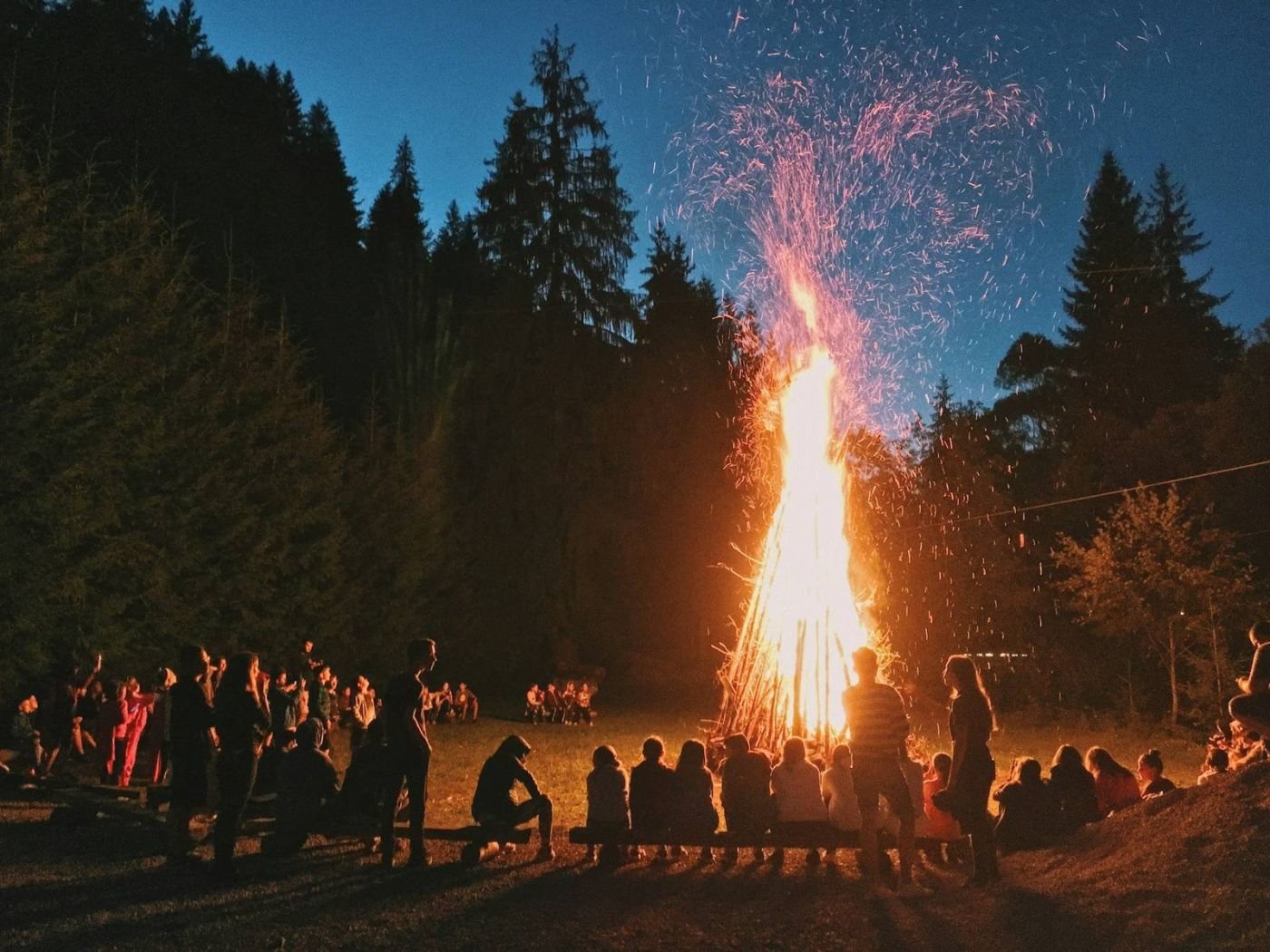
A team offsite is a planned meeting held away from the office, usually for one to three days, where a team steps out of daily work to set priorities, solve shared problems and build relationships. It mixes working sessions with team activities, often at a resort.
The setting changes, so the work changes.
Offsite or off-site?
Both spellings are correct. Both mean the same thing.
"Off-site" is the older, hyphenated form. "Offsite" is how most companies write it today. We use "offsite" in this guide.
Offsite vs retreat vs offsite meeting
People use these words loosely. Here's how they usually differ:
- Offsite meeting: A single working session away from the office. Could be half a day at a hotel in Gurugram.
- Team offsite (or company offsite): One to three days away, mixing work and team time, often with an overnight stay.
- Corporate retreat: Leans towards rest and reflection. Fewer sessions, more space. Common for leadership groups.
If your plan has a stay, sessions and a team dinner, call it an offsite.
Offsite vs onsite meeting
An onsite meeting happens in your office. It's cheap, quick and right for most decisions.
An offsite earns its cost when the team needs uninterrupted time, a change of scene, or a reason to work across departments.
We compare the two in detail in office meetings vs team offsites.
Why Do Companies Do Offsites?
Short answer: some conversations don't happen at a desk.
Companies run offsites to:
- Agree on next year's priorities, without Slack pinging
- Reset a team after a reorganisation, merger or new leader
- Get departments that rarely talk to work on one problem
- Thank people for a strong year
- Give remote and hybrid teams time in the same room
The benefits go deeper than that. We cover them in the benefits of a corporate team offsite.
Types of Team Offsite
Different goals need different formats. Match yours first.
| Type | Typical size | What it's for | What it needs |
|---|---|---|---|
| Strategy or leadership offsite | 10 to 40 | Annual plan, big decisions | A quiet resort, a good room, long sessions |
| All-hands or annual company offsite | 50 to 500 | Alignment, celebration | A large hall, a stage, a gala night |
| Team-building offsite | 15 to 100 | Trust, cross-team working | Shared activities, mixed groups |
| Incentive trip or sales kickoff | 20 to 300 | Reward top performers | A destination people want, free time |
| Tech or engineering offsite | 10 to 150 | Roadmap, architecture, hack days | Strong Wi-Fi, breakout rooms, screens |
| Distributed-team meetup | 10 to 80 | Face time for remote teams | Easy travel from several cities |
How Much Does a Team Offsite Cost in India?
This is the question everyone asks first.
The honest answer: it depends on four things. Headcount, nights, how far you travel, and the kind of stay.
Here's what published group and resort packages look like at popular offsite destinations.
Typical cost per person, per night
These ranges cover stay and main meals, on twin sharing. They're built from rates published by resorts and operators in Rishikesh, Jim Corbett, Manesar and Coorg, checked in November 2026.
| Tier | Typical per person, per night | What you usually get |
|---|---|---|
| Budget | ₹2,500 to ₹4,000 | Riverside camp or simple resort, all meals, one shared activity |
| Mid-Range | ₹5,000 to ₹7,000 | 3 to 4-star resort, breakfast and dinner or all meals, lawns, a hall on request |
| Premium | ₹11,000 to ₹22,000 | Luxury or 5-star resort, curated dining, spa, private spaces |
Some reference points behind those ranges:
- A Rishikesh riverside camp package lists ₹5,500 per person plus 5% GST for 2 nights, with all meals and 9 km of rafting.
- A Manesar resort's overnight team outing lists ₹6,159 to ₹6,999 per person, with breakfast, dinner and a day of team activities.
- A Jim Corbett 2-night package from Delhi lists ₹7,999, ₹13,999 and ₹21,999 per person across budget, jungle-lodge and luxury tiers.
- A luxury Coorg resort lists ₹43,600 per couple per night, with breakfast, dinner and taxes.
Treat these as typical, not quotes. Group rates are negotiated, and prices rise on long weekends, festival dates, Christmas and New Year.
Just a day out? Resort day outings near Gurugram start from about ₹1,200 to ₹1,500 per person plus GST at one Manesar resort, with lunch, tea and games.
Flying? As a reference, a three-day TrippingCube offsite in Goa usually starts from around ₹18,000 per person, with a 4-star stay, meals, transfers, an activity and a coordinator. Flights are added on top.
What goes into the cost
| Cost line | What it covers | How it's usually charged |
|---|---|---|
| Venue and rooms | Rooms on twin or triple sharing | Per person or per room, per night |
| Meals | Breakfast, lunch, dinner, tea breaks | Often bundled into the room rate |
| Travel | Coach, train or group flights | Coaches per km; flights per seat |
| Meeting room and AV | Hall, projector, screens, sound | Sometimes included for groups; often quoted separately |
| Activities | Safari, rafting, games, cook-offs | Per person or per batch |
| Facilitator | Someone to run strategy or team sessions | Quoted separately |
| GST | Tax on the bill | Rooms up to ₹7,500 a night attract 5%; above that, 18% |
| Contingency | Late joiners, extra vehicle, weather | We suggest keeping 10% aside |
The GST rates on rooms changed on 22 September 2025. Always ask whether a quote is GST-inclusive. Event services and extras can be billed at different rates.
Worked example: 40 people, 2 nights, Jim Corbett
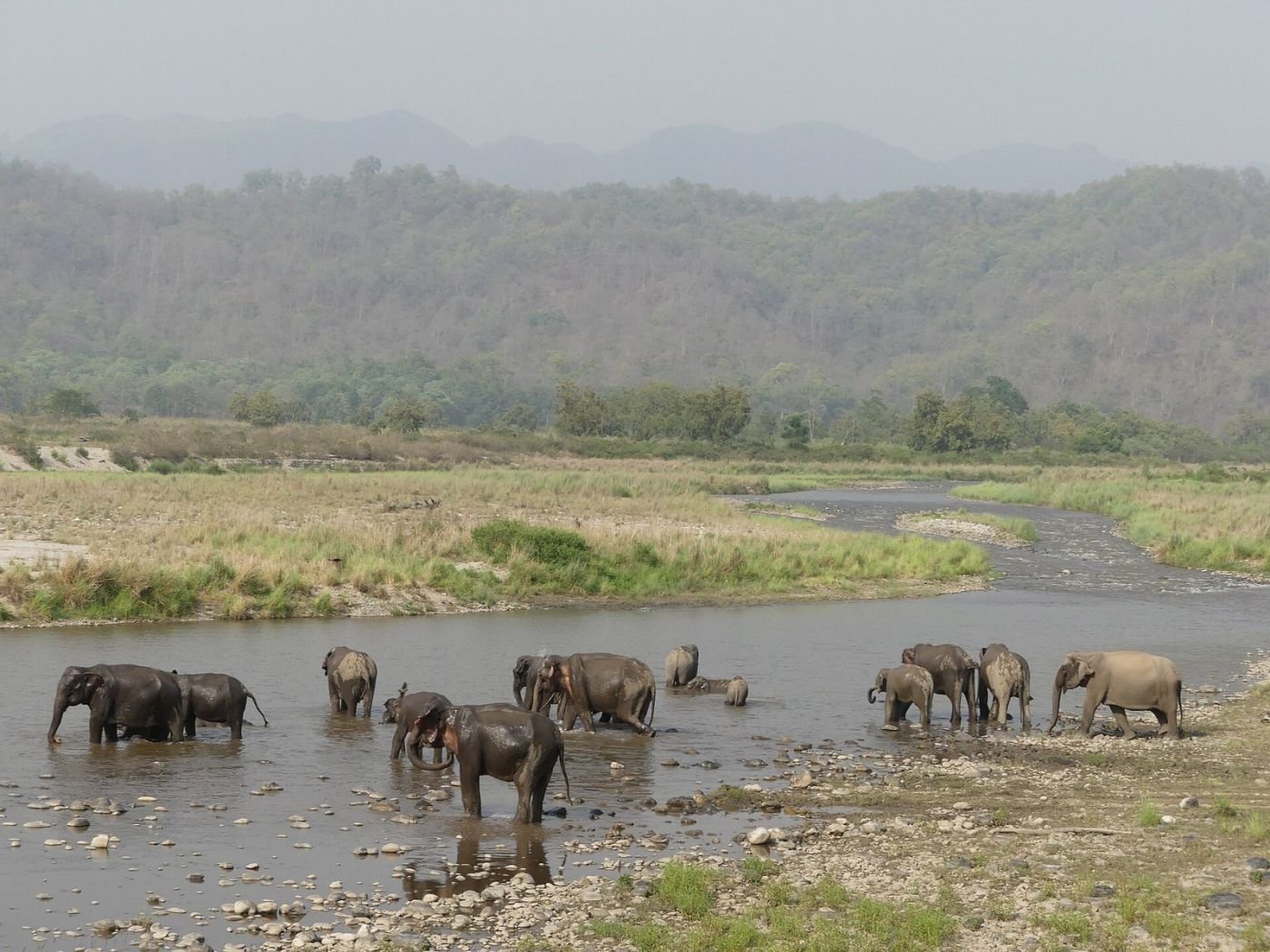 Photo: A. J. T. Johnsingh, WWF-India and NCF, CC BY-SA 3.0, via Wikimedia Commons
Say your team of 40 is in Delhi NCR. You want a mid-range resort, one safari and two days of sessions.
| Line | Low | High |
|---|---|---|
| Stay and meals (40 × 2 nights × ₹5,000 to ₹7,000) | ₹4,00,000 | ₹5,60,000 |
| One 45-seater coach, Delhi and back | ₹26,000 | ₹29,000 |
| Jungle safari, 7 jeeps | ₹31,500 | ₹42,000 |
| Contingency (10%) | ₹45,750 | ₹63,100 |
| Total before GST | about ₹5 lakh | about ₹7 lakh |
| Per person | about ₹12,600 | about ₹17,400 |
How we got there:
- The coach is costed at the ₹45 to ₹50 per km one Delhi operator publishes for a 45-seater, over roughly 500 km, plus ₹1,200 a day for the driver. Tolls and state permits come extra.
- A safari jeep takes about six people. One Delhi operator lists extra jeeps at ₹4,500 to ₹6,000 each.
- Meeting room, AV and a facilitator aren't in this table. Ask for them in the same quote.
Two ways to bring the number down: travel on weekdays, and pick a drive-to destination. A coach is cheaper than 40 flights.
How to Plan a Team Offsite: Step by Step
Most offsites go wrong weeks before anyone travels.
Here's the order that works.
Step 1: Write one goal
Not five. One.
Finish this sentence: "When we come back, we want ___ to be different."
Sales and product trusting each other. Three agreed priorities for next year. New joiners knowing someone outside their team.
The agenda, the activities, even the dinner seating come from that line.
Step 2: Set the headcount, dates and budget
Get three numbers signed off before you look at a single resort:
- Final headcount (and who's optional)
- Two or three possible date windows
- Budget per person, all in
Avoid quarter-end, appraisal weeks and big festivals.
Step 3: Pick the format and length
- Day out: A quick reset or a celebration. No rooms needed.
- 1 night: A focused working offsite close to the city.
- 2 nights: The sweet spot. One full day of work, one of activities.
- 3 nights or more: Incentive trips, or when people fly in from several cities.
Keep the travel short compared to the trip. Under two hours each way for one night. Up to six hours for two or three nights.
Step 4: Choose the destination and venue
Shortlist two or three places. For each venue, check:
- Can it keep your whole group in one property?
- Does the hall fit everyone, with breakout spaces?
- Is the Wi-Fi good enough for a live demo or a video call?
- What happens if it rains?
- Is there an option for people who don't drink, don't swim or can't do strenuous activities?
Step 5: Build the agenda
Work in the morning. Play in the afternoon. Celebrate in the evening.
Two 90-minute working blocks with a clear output beat a full day of slides. If a session could be an email, cut it.
There's a 2-day template below.
Step 6: Plan activities that make people talk
Watching a show together is pleasant. Nobody has to communicate.
Pick activities where mixed teams solve something together. A treasure hunt. A cook-off with a timer. A raft where everyone paddles or nobody moves.
Two strong activities beat five average ones.
Step 7: Sort the logistics
This is where most of the hours go. Rooming lists. Dietary needs. Pickups from three offices. The person who misses the coach.
Give logistics to one owner who isn't attending as a participant. Your team should have one job: show up.
Step 8: Bring something home
Write the outcomes down on the last afternoon. Share them within a week. Check in after 30 days.
That 30-day check-in is the step most companies skip. It's also the one that makes the offsite worth its cost.
Offsite planning timeline
| When | What to do |
|---|---|
| 10 to 12 weeks out | Set the goal, headcount, budget and date windows. Start here for 100+ people, peak season or travel abroad. |
| 8 weeks out | Shortlist destinations. Ask for two or three costed proposals. |
| 6 weeks out | Lock the venue and dates. Block rooms. Book coaches or group fares. |
| 4 weeks out | Send the save-the-date. Collect dietary needs, ID details and room preferences. Book safaris or permits. |
| 3 weeks out | Draft the agenda. Brief session owners and any facilitator. |
| 2 weeks out | Final headcount. Rooming list. Activity teams, mixed on purpose. |
| 1 week out | Share the itinerary, packing list and emergency contacts. Confirm every booking in writing. |
| 1 day before | Check the hall, AV and Wi-Fi. Run through pickups with the coordinator. |
| During | One person owns logistics. Everyone else participates. |
| Day after | Share outcomes and photos. Send a two-question feedback form. Book the 30-day check-in. |
A 2-Day Team Offsite Agenda Template
Adapt this to your goal. It assumes a drive of four to six hours.
Day 1: Arrive and open up
- 07:00 Coach leaves the office. Breakfast on the way.
- 12:30 Check-in and lunch.
- 14:30 Kick-off: why we're here and what we want to leave with (45 min).
- 15:30 Ice-breaker in mixed teams on the lawns.
- 17:00 Working block 1: the biggest problem we need to solve (90 min).
- 19:30 Bonfire and dinner. Seating by plan, not by team.
Day 2: Work, play, decide
- 06:00 Optional: safari, sunrise walk or yoga.
- 09:00 Working block 2: options and trade-offs (90 min).
- 11:00 Working block 3: decisions, owners and dates (90 min).
- 13:00 Lunch.
- 14:30 Team activity: one that needs people to talk.
- 17:00 Close: read back the decisions. Each team names one commitment.
- 18:00 Coach home, or a celebration dinner if you stay a second night.
Staying two nights? Move the close to the morning of Day 3 and turn Day 2's evening into the gala night.
How Small Companies Plan an Annual Offsite
A 15-person startup doesn't need a ballroom.
What works for small teams:
- Book the whole place. Small resorts, homestays and villas give you privacy and a shared living room for sessions.
- Drive, don't fly. One tempo traveller from the office is simpler than 15 tickets.
- Go mid-week. Rates are often lower on weekdays, and nobody gives up a weekend.
- Let the founder sit back. The founder's job is the goal and one session. Not the rooming list.
- Fix the date early. Pick the same month each year so people plan around it.
Distributed and Hybrid Team Offsites
If your team is spread across Delhi, Bengaluru and Pune, the offsite might be the only time everyone meets.
Plan it differently:
- Choose a place that's fair to reach. Goa works from all three cities. Pick a destination near an airport with good direct flights.
- Stagger arrivals. Build a buffer afternoon for flights that land late.
- Use the time for what calls can't do. Relationships, hard conversations, whiteboard work. Skip status updates.
- Pair people across cities for activities and dinners.
- Two days is enough. Most of the value comes from the first evening and the second morning.
Team Offsite Ideas for Tech Companies
Engineers can smell a forced trust exercise. Give them something real to build.
- Hack day: Mixed teams of engineers, designers and product people ship one small thing in six hours. Demos after dinner.
- Architecture review: A whiteboard morning on the system you'll need in 18 months.
- Roadmap trade-offs: Product and engineering agree what won't be built this year.
- Customer day: Sales and support walk engineers through the three worst tickets of the quarter.
- No-laptop afternoon: Rafting, a trek or a cook-off. Screens stay in the rooms.
Check the Wi-Fi before you book. Ask for a speed test from the hall, not the lobby.
Team Offsite Destinations by Travel Time
Start with where your team is based.
From Delhi NCR
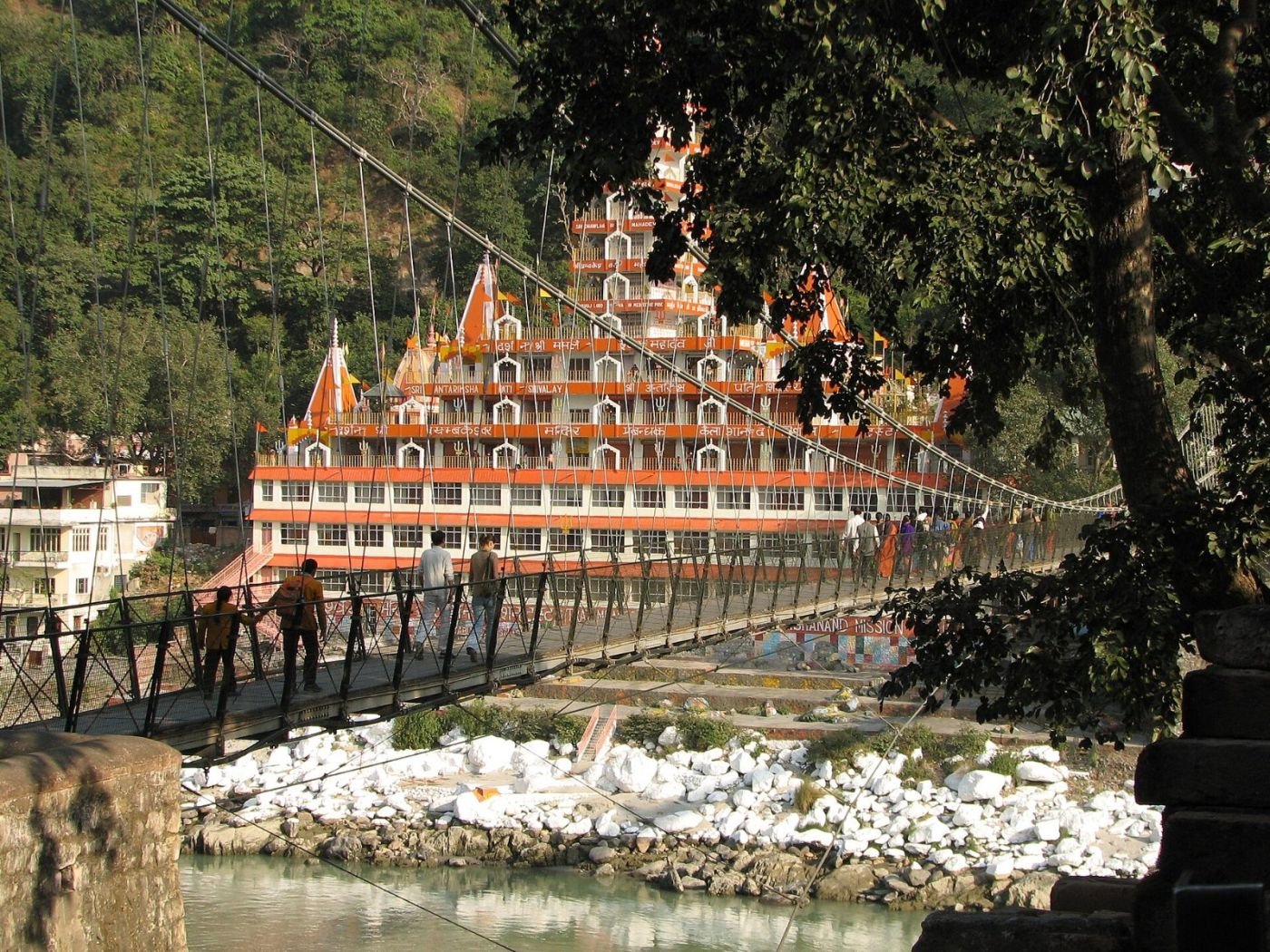 Photo: McKay Savage, CC BY 2.0, via Wikimedia Commons
- 1 to 1.5 hours: Damdama and the Aravalli resorts, Manesar and Sohna. Day outings and one-night offsites.
- 2.5 to 3 hours: Neemrana. A heritage fort for groups of up to about 100.
- 5 to 6 hours: Jim Corbett for safaris and riverside resorts. Rishikesh for rafting and camps.
- About 6 hours: Lansdowne, Mussoorie and Kasauli for quiet hill-station retreats.
- Worth a flight: Goa, Udaipur, Kashmir.
All ten drive-to options are compared in corporate offsite destinations near Delhi.
From Bengaluru
- Within a drive: Coorg, Chikmagalur, Ooty and Coonoor.
- Worth a flight: Goa, Kerala.
From Mumbai and Pune
- Within a drive: Lonavala and Khandala, Alibaug, Mahabaleshwar.
- Worth a flight: Goa, Udaipur.
By season
- November to February: Goa, Rajasthan and the beaches. See year-end team offsite ideas for December and January.
- March to June: The hills near Delhi.
- July to September: Lonavala, Coorg and the Western Ghats. Most of Jim Corbett's safari zones close. See the best offsite destinations for the monsoon.
Mistakes to Avoid
- Five goals. An offsite that tries to do everything does nothing well.
- Back-to-back slides. Energy drops after lunch. Plan for it.
- Letting teams self-sort. Engineers will find engineers. Mix groups on purpose.
- One big adventure for everyone. Offer options for people who can't or won't.
- Ignoring the drive. Six hours on a coach for a one-night trip leaves no offsite.
- Booking late in peak season. From October to March, good resorts fill with weddings and other groups.
- The organiser working the whole trip. If your HR lead is on the phone all weekend, they missed the offsite.
- No follow-up. Without a 30-day check-in, it was just a trip.
Team Offsite Planning Checklist
Before
- [ ] One goal, written down
- [ ] Headcount, dates and budget approved
- [ ] Two or three costed proposals compared
- [ ] Venue booked, rooms blocked, contract and cancellation terms read
- [ ] Travel booked from every city
- [ ] Hall, AV, Wi-Fi and breakout rooms confirmed
- [ ] Activities booked, with options for everyone
- [ ] Dietary needs, ID details and rooming list collected
- [ ] Agenda shared with session owners
- [ ] Emergency contacts, nearest hospital and insurance noted
During
- [ ] One person owns logistics
- [ ] Mixed teams for activities and dinners
- [ ] Outcomes written down on the last afternoon
After
- [ ] Outcomes shared within a week
- [ ] Feedback form sent
- [ ] 30-day check-in in the calendar
Frequently Asked Questions
What is a team offsite?
A team offsite is a planned meeting held away from the office, usually for one to three days. The team steps out of daily work to set priorities, solve shared problems and build relationships, mixing working sessions with team activities, often at a resort.
How much does a team offsite cost in India?
For stay and meals, typical published rates run from ₹2,500 to ₹4,000 per person per night on a budget, ₹5,000 to ₹7,000 mid-range and ₹11,000 to ₹22,000 premium. Add travel, activities, meeting rooms and GST. A 40-person, 2-night mid-range offsite in Jim Corbett from Delhi works out to roughly ₹12,600 to ₹17,400 per person before GST.
What is the difference between an offsite and a retreat?
An offsite usually mixes work sessions and team activities, with a clear goal. A retreat leans towards rest and reflection, with fewer sessions. Leadership groups often use the word retreat.
Is it offsite or off-site?
Both are correct and mean the same. "Offsite" is the more common spelling in business today.
How long should a team offsite be?
Two nights is the sweet spot for most teams: one day of work and one of activities. One night works for a focused session close to the city. Three nights or more suits incentive trips or teams flying in.
How far in advance should we plan a company offsite?
Six to eight weeks for a domestic offsite. About three months for groups over 100, long weekends or the October to March season. Three to four months for offsites abroad.
How do small companies organise their annual team offsite?
Small teams usually book a whole small resort or villa within a drive, travel together in one vehicle, go mid-week, and fix the same month every year. One person, not the founder, owns the logistics.
What should a team offsite agenda include?
A clear opening on the goal, two or three 90-minute working blocks with a defined output, one team activity that needs people to talk, a shared dinner, and a closing session that lists decisions, owners and dates.
Why Plan with TrippingCube
We've spent six years moving teams, from two-day offsites in the hills to conferences abroad.
- Trusted by 500+ teams, including Paytm and NVIDIA.
- Groups of 15 to 1,000. We find properties that keep your whole team together.
- One point of contact. Stay, meals, travel from every city, meeting room, activities and the agenda, on one invoice.
- A coordinator on the ground, so your organiser gets to be part of the offsite.
- A costed proposal within 48 hours of your brief, with a clear cost per person.
One goal. The right place. Someone else holding the clipboard.
Bond hard. Leave the logistics to us.