
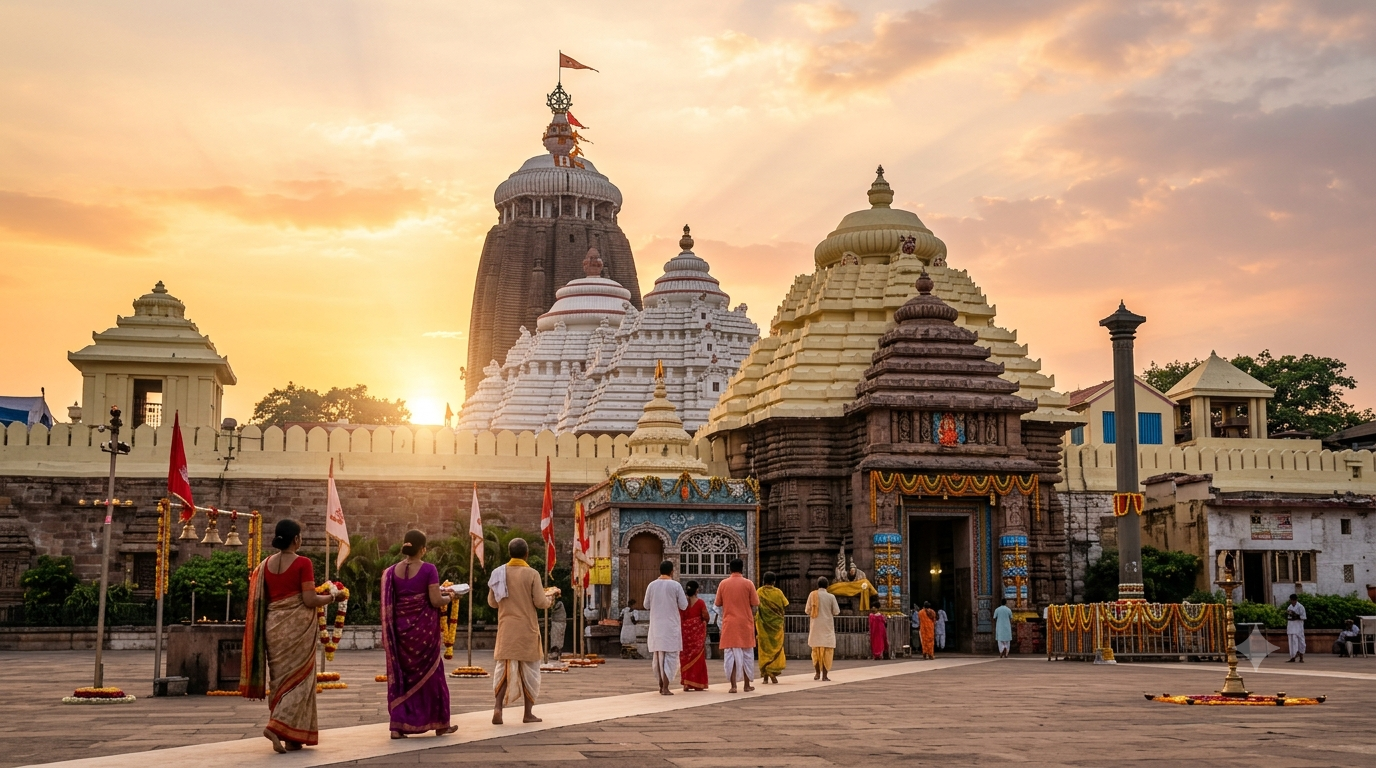
Jagannath Temple Reopens for Devotees: Latest Update, History And Complete Travel Guide to Puri
The holy city of Puri is once again buzzing with devotion as the sacred Jagannath Temple welcomes devotees after the completion of the annual Anasara period. Every year, millions of pilgrims eagerly wait for this special moment because it marks the return of public darshan of Lord Jagannath, Lord Balabhadra, and Devi Subhadra.
During the Anasara period, the temple remains closed for public darshan after the grand Snana Yatra. According to Hindu tradition, the deities symbolically fall ill after the ceremonial bath and take a period of rest. As a result, devotees patiently wait for their first glimpse of the deities before the grand Rath Yatra begins.
Now, the wait is finally over. The temple has reopened, and devotees can once again witness the sacred Nabajaubana Darshan, where the deities appear in their refreshed and youthful form. This occasion attracts thousands of pilgrims from across India and abroad, making Puri one of the country’s busiest spiritual destinations.
Moreover, the reopening of the temple marks the beginning of one of India’s biggest religious celebrations—the world-famous Rath Yatra. The entire city comes alive with devotional songs, colourful decorations, temple rituals, and an atmosphere filled with faith and excitement.
If you’re planning a spiritual journey, this is one of the best times to visit Jagannath Temple. Along with divine blessings, you’ll also witness centuries-old traditions, vibrant cultural celebrations, and the unmatched spiritual charm of Puri.
About Jagannath Temple, Puri
Located in the coastal city of Puri, Odisha, Jagannath Temple stands as one of India’s most respected and visited Hindu pilgrimage sites. It is also one of the four sacred Char Dham pilgrimage destinations, along with Badrinath, Dwarka, and Rameswaram. Every year, millions of devotees visit this holy temple to seek blessings and experience its unique spiritual atmosphere.
The temple is dedicated to Lord Jagannath, a revered form of Lord Vishnu. Alongside Him, devotees worship Lord Balabhadra and Goddess Subhadra. Together, these three deities represent love, unity, compassion, and divine protection.
Furthermore, the temple is famous for its magnificent Kalinga-style architecture. Its towering main shrine, detailed stone carvings, and beautifully designed gateways reflect the artistic brilliance of ancient Odisha. Even after centuries, the temple continues to inspire visitors with its timeless beauty.
Apart from its architecture, Jagannath Temple is well known for preserving centuries-old traditions. Temple priests continue to perform daily rituals exactly as they did hundreds of years ago. Similarly, every festival, ceremony, and offering follows ancient customs that have been carefully passed down through generations.
Another fascinating aspect of the temple is its massive kitchen. It is considered one of the largest temple kitchens in the world and prepares Mahaprasad for thousands of devotees every single day. The cooking methods have remained unchanged for centuries, making this tradition truly remarkable.
Today, Jagannath Temple serves as more than just a place of worship. It represents India’s rich cultural heritage, deep-rooted spirituality, and living traditions. Whether you visit for religious reasons or cultural exploration, the temple promises an unforgettable experience.
The Spiritual Significance of Jagannath Temple
The name Jagannath means “Lord of the Universe.” For millions of Hindus, Lord Jagannath represents compassion, equality, and unconditional love. Unlike many temples dedicated to a single deity, Jagannath Temple brings together Lord Jagannath, Lord Balabhadra, and Goddess Subhadra, symbolising harmony and togetherness.
Moreover, Jagannath Temple holds a special place in Hinduism because it forms an important part of the Char Dham pilgrimage. Many devotees believe that completing the Char Dham Yatra brings spiritual peace and divine blessings. As a result, pilgrims from every corner of the country include Puri in their spiritual journey.
The temple also teaches a beautiful message of equality. Every day, devotees from different regions and backgrounds come together to offer prayers and receive Mahaprasad. This shared experience reflects the belief that everyone is equal before the Lord.
In addition, the annual Rath Yatra beautifully represents Lord Jagannath’s love for His devotees. During this grand festival, the deities leave the temple and travel through the streets of Puri in magnificent wooden chariots. This unique tradition allows everyone to seek blessings, including those who cannot enter the temple.
Another important tradition is the annual Anasara period. During these sacred days, devotees believe the deities rest and recover after Snana Yatra. Although the temple remains closed for public darshan, the emotional connection between devotees and the Lord becomes even stronger. Consequently, the reopening of the temple becomes a joyful celebration filled with devotion and gratitude.
Above all, Jagannath Temple offers much more than religious rituals. It gives visitors an opportunity to experience faith, history, culture, architecture, and community in one sacred destination. Whether you seek spiritual peace or wish to explore India’s rich heritage, a visit to Jagannath Temple leaves a lasting impression on every traveller.
Why Was the Temple Closed?
Many first-time visitors often wonder why Jagannath Temple closes its doors every year before the Rath Yatra. However, this temporary closure is an important part of an age-old tradition that devotees deeply respect.
The ritual begins immediately after Snana Yatra, one of the temple’s most significant annual festivals. During this ceremony, temple priests bathe Lord Jagannath, Lord Balabhadra, and Goddess Subhadra with 108 pots of sacred water. According to Hindu beliefs, this ceremonial bath causes the deities to develop a symbolic fever.
As a result, temple priests move the deities to a private chamber called the Anasara Ghar. Here, they perform traditional healing rituals and offer Ayurvedic herbs, fruits, and special preparations for approximately fifteen days. During this period, devotees cannot have public darshan inside the temple.
Instead of visiting Jagannath Temple, many devotees travel to the nearby Alarnath Temple in Brahmagiri. They believe Lord Jagannath resides there while resting during the Anasara period. Consequently, Alarnath Temple also receives thousands of pilgrims during these sacred days.
Meanwhile, temple artisans carefully repaint and decorate the wooden idols with fresh colours and ornaments. This process restores the divine appearance of the deities before they bless devotees once again.
Finally, the Anasara period ends with Nabajaubana Darshan. On this special day, devotees witness the deities in their refreshed and youthful form for the first time before the grand Rath Yatra begins.
This beautiful tradition reminds devotees that Lord Jagannath shares human emotions and experiences. Therefore, millions feel a deeper emotional connection with the Lord during this sacred period.
Latest Update: Devotees Welcome the Return of Darshan
The wait has finally come to an end as Jagannath Temple has reopened its doors for devotees after the completion of the sacred Anasara rituals.
Thousands of pilgrims gathered in Puri from the early hours of the morning to witness the much-awaited Nabajaubana Darshan. Devotees stood in long queues with prayers, flowers, and offerings, hoping to receive the first glimpse of Lord Jagannath, Lord Balabhadra, and Goddess Subhadra.
Moreover, the reopening of the temple has filled the entire city with festive energy. Streets around the temple are decorated with colourful banners, devotional music echoes through the city, and local markets welcome thousands of visitors every day.
Hotels, guest houses, restaurants, and local businesses have also started receiving a large number of pilgrims. Consequently, Puri has once again become one of India’s busiest pilgrimage destinations.
The reopening also marks the beginning of preparations for the world-famous Rath Yatra, where the three deities travel through the streets of Puri in beautifully decorated wooden chariots. Millions of devotees from across India and different parts of the world visit Puri to witness this extraordinary festival.
If you are planning your visit, this is undoubtedly one of the most exciting times to experience the rich traditions, spiritual atmosphere, and vibrant culture of Jagannath Temple.
The Fascinating History of Jagannath Temple
Jagannath Temple has a rich history that dates back more than eight centuries. The temple continues to stand as one of India’s greatest symbols of faith, culture, and architectural excellence.
King Anantavarman Chodaganga Deva of the Eastern Ganga Dynasty started the construction of the temple during the 12th century. Later, his successors completed the magnificent structure that visitors admire today.
Over the centuries, Jagannath Temple witnessed several historical events, political changes, and natural challenges. Nevertheless, the temple successfully preserved its traditions and rituals through every phase of history.
Furthermore, many renowned saints and spiritual leaders visited Puri to seek the blessings of Lord Jagannath. Among them, Sri Chaitanya Mahaprabhu played an important role in spreading devotion towards Lord Jagannath across India.
The temple complex covers nearly 400,000 square feet and includes several smaller shrines dedicated to different Hindu deities. Massive walls surround the temple and protect this sacred pilgrimage site.
Today, Jagannath Temple continues to inspire millions of devotees with its timeless traditions, religious significance, and historical legacy. Every stone within the temple reflects centuries of devotion and craftsmanship.
Architectural Marvel of Jagannath Temple
The Jagannath Temple is one of the finest examples of classical Kalinga architecture.
Standing approximately 65 meters high, its majestic spire dominates the skyline of Puri and can be seen from several kilometers away.
Some of its most remarkable architectural features include:
- The iconic Neelachakra, an eight-metal wheel mounted atop the temple.
- The sacred flag that is changed every single day through a traditional ritual.
- Magnificent stone carvings depicting mythological stories.
- Massive temple walls designed for protection and grandeur.
- Beautiful gateways leading into the sacred complex.
Every corner of the temple reflects centuries of artistic excellence, engineering brilliance, and spiritual symbolism.
Visitors are often amazed not only by the temple’s size but also by the incredible craftsmanship visible in every carved stone.
Darshan Timings at Jagannath Temple
If you’re planning a visit to the Jagannath Temple, knowing the darshan schedule can help you make the most of your pilgrimage. The temple follows a well-defined daily routine, with rituals beginning early in the morning and continuing until late at night.
General Darshan Timings:
- Opening Time: Around 5:00 AM
- Morning Darshan: 5:30 AM – 12:00 PM
- Afternoon Break: Temple rituals and offerings
- Evening Darshan: 4:00 PM – 9:00 PM
- Temple Closing Time: Around 10:00 PM
Note: Timings may vary during festivals, special rituals, and Rath Yatra. It’s always advisable to check the latest schedule before planning your visit.
Best Time to Visit Jagannath Temple
Although the temple welcomes devotees throughout the year, certain seasons offer a more comfortable and spiritually enriching experience.
- During Rath Yatra (June–July)
The annual Rath Yatra is undoubtedly the biggest attraction in Puri. During this grand festival, Lord Jagannath, Lord Balabhadra, and Devi Subhadra are taken out in magnificent wooden chariots, allowing millions of devotees to seek blessings.
The city transforms into a vibrant spiritual destination filled with devotional chants, cultural performances, and festive celebrations.
- Winter Season (October to February)
Winter is considered the best time for sightseeing. Pleasant weather makes it ideal for exploring the temple, Puri Beach, Konark Sun Temple, and nearby attractions.
- Monsoon Season (July to September)
The rains add freshness to the coastal city, making it a peaceful time for travelers who prefer fewer crowds after the festival season.
How to Reach Jagannath Temple
Puri is well connected by air, rail, and road, making it easy for travelers from across India.
-
By Air
The nearest airport is Biju Patnaik International Airport in Bhubaneswar, located approximately 60 km from Puri. From the airport, taxis and buses are readily available.
-
By Train
Puri Railway Station is directly connected to major cities including:
- Delhi
- Kolkata
- Mumbai
- Chennai
- Hyderabad
- Bengaluru
The temple is around 3 km from the railway station.
-
By Road
Regular buses and private taxis connect Puri with Bhubaneswar, Cuttack, Konark, and other cities in Odisha. The road journey offers scenic views of the coastal landscape.
Temple Entry Rules and Dress Code
Before entering the temple, visitors should be aware of a few important guidelines to ensure a respectful and smooth experience.
-
Entry Restrictions
As per long-standing temple tradition, only Hindus are permitted inside the main temple complex. Non-Hindu visitors can view the temple from nearby viewpoints, such as the Raghunandan Library rooftop.
-
Dress Modestly
While there is no strict uniform, visitors are encouraged to wear traditional or modest clothing suitable for a place of worship.
-
Mobile Phones and Cameras
Mobile phones, cameras, smartwatches, and electronic gadgets are generally not allowed inside the temple premises. Lockers are available outside the temple for safekeeping.
-
Footwear
Shoes and slippers must be removed before entering the temple complex.
Respecting these rules helps preserve the sanctity of one of India’s most revered pilgrimage sites.
Mahaprasad – A Sacred Culinary Tradition
No visit to Jagannath Temple is complete without tasting the famous Mahaprasad, also known as Abhada. Prepared in the temple’s massive kitchen, it is considered one of the holiest offerings in Hindu tradition.
The temple kitchen is believed to be one of the largest in the world, where hundreds of earthen pots are stacked over traditional wood-fired stoves to prepare meals for thousands of devotees every day.
The Mahaprasad typically includes:
- Rice
- Dal
- Mixed vegetable curry
- Kheer
- Khichdi
- Traditional Odia sweets
Sharing Mahaprasad with family and fellow devotees is considered an act of equality and devotion, reflecting the inclusive spirit of Lord Jagannath.
Top Places to Visit Near Jagannath Temple
A trip to Puri is incomplete without exploring its nearby attractions.
1. Puri Beach
Located just a short distance from the temple, Puri Beach is known for its golden sands, sunrise views, camel rides, and lively local markets.
2. Konark Sun Temple
Approximately 35 km from Puri, this UNESCO World Heritage Site is famous for its magnificent stone chariot architecture and intricate carvings.
3. Chilika Lake
Asia’s largest brackish water lagoon is a paradise for nature lovers. Visitors can enjoy boat rides, birdwatching, and dolphin spotting, especially at Satapada.
4. Gundicha Temple
This temple holds special significance during Rath Yatra, as Lord Jagannath stays here for several days before returning to the main temple.
5. Narendra Tank
A serene water reservoir surrounded by temples, Narendra Tank is an important pilgrimage spot and hosts several religious ceremonies throughout the year.
Travel Tips for Visitors
To make your pilgrimage comfortable and memorable, keep these useful tips in mind:
- Arrive early in the morning to avoid long queues.
- Carry a valid ID card while traveling.
- Stay hydrated, especially during summer months.
- Book hotels and transport well in advance during Rath Yatra.
- Follow temple rules and respect local customs.
- Avoid carrying prohibited electronic devices inside the temple.
- Purchase authentic Mahaprasad only from authorized temple counters.
- Wear comfortable footwear for walking outside the temple premises.
- Keep cash handy for small purchases and donations.
Why Visit Jagannath Temple?
Jagannath Temple is not just a place of worship—it is a destination where spirituality, culture, history, and tradition come together.
Whether you seek divine blessings, admire ancient architecture, participate in vibrant festivals, or simply experience India’s rich cultural heritage, Puri offers something truly unforgettable.
The annual reopening of the temple after the sacred Anasara period reminds devotees of renewal, hope, and the enduring bond between the divine and humanity.
Frequently Asked Questions (FAQs)
Is Jagannath Temple open throughout the year?
Yes, the temple remains open throughout the year, except for specific periods such as the Anasara ritual when public darshan is temporarily suspended.
Why does Jagannath Temple close after Snana Yatra?
According to tradition, the deities symbolically fall ill after the ceremonial bath during Snana Yatra and rest for around 15 days before reappearing during Nabajaubana Darshan.
Can non-Hindus enter Jagannath Temple?
No. Entry into the main temple complex is traditionally restricted to Hindus.
What is the best time to visit Jagannath Temple?
The winter season (October to February) is ideal for comfortable sightseeing, while the Rath Yatra period offers a unique spiritual experience for those wishing to witness the grand festival.
How much time is needed to explore the temple?
Most visitors spend 2–3 hours exploring the temple complex and participating in darshan. If you plan to visit nearby attractions, consider a full-day itinerary.
Is photography allowed inside the temple?
No. Photography and videography are prohibited inside the temple premises.
Plan Your Spiritual Journey with TrippingCube
A visit to Jagannath Temple is more than just a pilgrimage—it’s a journey into centuries of faith, devotion, and cultural heritage. From witnessing the sacred rituals to exploring the beautiful beaches and historical landmarks of Puri, every moment leaves a lasting impression.
If you’re planning a hassle-free trip to Odisha, TrippingCube can help you design a personalized itinerary that includes comfortable accommodations, local sightseeing, and seamless travel arrangements. Whether you’re traveling with family, friends, or on a solo spiritual retreat, our curated travel experiences ensure that you enjoy every aspect of your journey with peace of mind.
Conclusion
The reopening of the Jagannath Temple marks a deeply significant moment for millions of devotees eagerly awaiting the opportunity to seek the blessings of Lord Jagannath, Lord Balabhadra, and Devi Subhadra. It is a celebration of faith, renewal, and timeless traditions that continue to inspire generations.
Whether you visit during the vibrant Rath Yatra or choose a quieter season to experience the temple’s spiritual aura, Puri promises an unforgettable blend of devotion, history, architecture, and coastal beauty.
Start planning your sacred journey today, and let the divine charm of Jagannath Temple leave you with memories and blessings that last a lifetime.

