
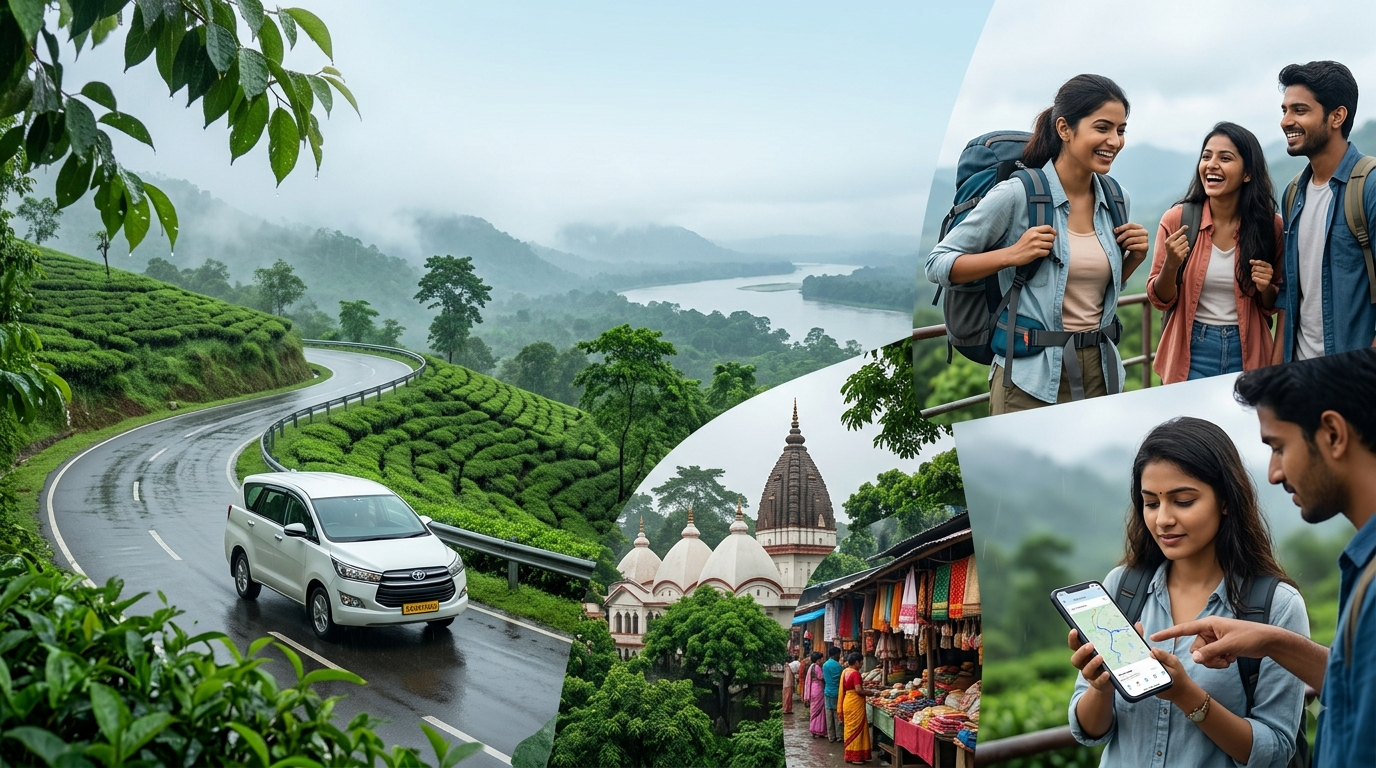
Is Assam Safe to Visit Right Now? What Travellers Should Know Before Planning a Trip
Planning an Assam trip and wondering, “Is Assam safe to visit right now?”
It’s a completely valid question, especially if you’re planning to travel during the monsoon. Assam is one of India’s most beautiful destinations, famous for its tea gardens, wildlife, temples, rivers, cultural heritage and peaceful landscapes. But the monsoon can also bring heavy rainfall, flooding and changes in road and transport conditions.
As of August 2026, parts of Assam are still dealing with the effects of flooding. Recent reports indicate that although the situation has started improving in some areas, thousands of people remain affected and flood-hit districts continue to face disruption.
However, that doesn’t mean the whole of Assam should simply be considered unsafe.
And this is the most important thing travellers need to understand.
Assam is a large state, and conditions can vary from one destination to another.
A road affected by flooding in one area doesn’t automatically mean that Guwahati, Majuli, Sivasagar or another destination has the same conditions.
So instead of asking only, “Is Assam safe to visit?”, travellers should ask:
“Is my chosen destination safe and accessible on my travel dates?”
That is the question that can actually help you make a sensible travel decision.
This guide will help you understand the current Assam travel situation, what to check before booking, how monsoon can affect your plans, which destinations you can consider and how to plan a safer and more comfortable Assam holiday.
Quick Answer: Is Assam Safe to Visit Right Now?
Assam can be visited, but travellers should exercise extra caution during the current monsoon and flood situation.
Before travelling, check the latest conditions for your exact destination and route.
Pay attention to:
- Current weather conditions
- Flood situation
- Road accessibility
- Train and flight status
- Local transportation
- Hotel accessibility
- Tourist attraction status
- Ferry or river conditions
- Local administration advisories
Don’t rely only on an old travel blog or a social media video.
A destination can look completely different from one week to the next during the monsoon.
If your chosen route is accessible, your accommodation confirms that it is operating normally and there are no warnings affecting your journey, you may still be able to travel.
But if your destination is severely affected by flooding or your route requires unnecessary risk, postponing the trip is the smarter choice.
A holiday can wait. Your safety shouldn’t.
Why Are Travellers Asking About Assam Safety Right Now?
Assam’s monsoon is naturally associated with heavy rainfall, and the region’s rivers and low-lying areas can be particularly vulnerable to flooding.
For local communities, this is much more than a travel inconvenience. Flooding can affect homes, roads, agriculture and daily life.
For travellers, the impact can appear in different ways.
A road journey may take longer.
A route may temporarily become difficult to use.
A ferry service may be affected.
An outdoor activity may be cancelled.
A hotel may be open but difficult to reach.
This is why planning an Assam trip during monsoon requires more flexibility than travelling during a dry season.
You shouldn’t create an itinerary where every hour depends on everything going perfectly.
Instead, leave some breathing room.
If your original plan changes, you should have enough flexibility to adjust it.
Does the Current Flood Situation Mean You Should Cancel Your Assam Trip?
Not necessarily.
This is where travellers often make the mistake of treating an entire state as one destination.
Assam is much larger than a single city or tourist attraction.
If you are planning to stay in an unaffected area and your route is operating normally, your travel experience may be very different from someone travelling through a severely affected district.
However, you should also avoid the opposite mistake.
Don’t assume that everything is fine just because one part of Assam is accessible.
Check your specific route and destination.
Before departure, contact your hotel or travel provider if there has been significant rainfall in the area.
Ask whether the road is accessible.
Check whether your planned attractions are operating.
And if local authorities advise against travelling to an area, take that advice seriously.
The goal isn’t to cancel your trip unnecessarily.
It’s to make sure you’re making the decision based on the latest available information.
What Makes Assam Worth Visiting?
Even with the additional planning required during monsoon, Assam remains a fascinating destination for travellers.
The state offers a combination that is difficult to find in one place.
There are tea gardens stretching across the landscape.
There is the Brahmaputra flowing through the region.
There are ancient temples and historic sites.
There are unique cultural traditions.
There are villages, forests and wildlife landscapes.
And, of course, there is Assamese cuisine.
Assam Tourism highlights destinations including Majuli, Sivasagar, Hajo, Dima Hasao and Nameri, showing that the state offers much more than its most famous wildlife destination.
For travellers, that means you can build completely different types of holidays here.
A cultural trip.
A food-focused journey.
A nature escape.
A family holiday.
A slow travel experience.
Or a longer Northeast India itinerary.
Guwahati – The Best Starting Point for an Assam Trip
For many travellers, Guwahati is the natural starting point for exploring Assam.
The city combines urban convenience with cultural and religious attractions, making it useful both as a holiday destination and as a base for exploring nearby areas.
One of the most important attractions is Kamakhya Temple, a major pilgrimage site located on Nilachal Hill.
Apart from religious tourism, travellers can explore local markets, try Assamese food and experience the city’s connection with the Brahmaputra.
Guwahati is also a practical starting point because many travellers arrive here before continuing towards other destinations.
If you’re travelling during the monsoon, however, don’t assume that every local journey will take the same amount of time as it normally would.
Heavy rain can affect traffic and local movement.
So keep your first day relatively relaxed, especially if you’ve travelled a long distance to reach Assam.
Majuli – A Cultural Side of Assam
If your idea of travel is more about culture than ticking famous attractions off a list, Majuli can be one of the most interesting places to include in your itinerary.
Majuli is closely associated with Assamese cultural traditions and its Satras.
Visitors can learn about traditional arts, mask-making, Sattriya culture and local ways of life.
The experience is less about rushing between attractions and more about understanding the destination.
You can explore villages, visit cultural institutions, interact with local artisans and simply enjoy the slower rhythm of life.
However, there is one important consideration for monsoon travellers.
Majuli involves river transport.
Weather and river conditions can affect travel arrangements, so always check the latest ferry information before starting your journey.
Don’t create an itinerary where you have only a small window between arriving and catching another connection.
Give yourself time.
Sivasagar – For Travellers Who Love History
Assam has a fascinating historical identity, and Sivasagar is one of the best places to discover it.
The city is strongly associated with the Ahom kingdom and contains several important historical landmarks.
Some of the major attractions include Rang Ghar, Talatal Ghar and Shiva Dol.
For history lovers, Sivasagar offers a very different Assam experience from wildlife-focused destinations.
You can spend time exploring historic structures, temples and the surrounding cultural landscape.
Instead of treating the city as a quick sightseeing stop, give yourself enough time to understand its history.
That makes the journey much more meaningful.
Hajo – Where History and Different Faiths Meet
Hajo is another destination worth considering if you want to experience Assam’s cultural diversity.
Located near Guwahati, Hajo is associated with important religious sites connected with Hindu, Muslim and Buddhist traditions.
Assam Tourism describes Hajo as a confluence of these faiths and lists attractions including the Hayagriva Madhava Temple and Powa Mecca.
For travellers interested in spirituality, architecture and history, Hajo can be a rewarding addition to an Assam itinerary.
And because it is relatively close to Guwahati, it can work well for travellers who don’t want to spend several hours travelling between distant destinations during the monsoon.
Kaziranga: Don’t Plan Your Trip Without Checking the Season
No discussion about Assam tourism is complete without mentioning Kaziranga.
The national park is famous for its one-horned rhinoceros and is one of the biggest reasons wildlife lovers visit Assam.
But there is an important point for anyone planning an Assam trip in August.
Kaziranga is generally closed during the monsoon.
Assam Tourism information states that the park’s usual best visiting period is from November to April, while it remains closed from May 1 to the end of October due to floods.
That means travellers should not build an August itinerary around a regular Kaziranga safari.
If wildlife is the primary reason you’re visiting Assam, consider travelling in the usual operating season instead.
And if you’re travelling during the monsoon for other experiences, focus your itinerary on destinations and activities that are actually suitable for your travel dates.
Is Assam Safe for Families?
For families, travel safety is about more than simply choosing a destination with fewer risks. Parents also think about comfortable hotels, reliable transportation, manageable travel times and whether children will be comfortable if the weather changes.
Assam can be a wonderful family destination, but during the monsoon, it is better to keep the itinerary relaxed. Heavy rainfall can slow down road journeys, affect outdoor plans and make long-distance travel tiring.
Instead of trying to cover several destinations in a few days, choose a smaller number of places and give yourself enough time to enjoy them.
A family-friendly Assam trip can include:
- Comfortable and easily accessible accommodation
- Reliable transportation
- Shorter travel days
- Cultural and heritage attractions
- Local food experiences
- Flexible sightseeing plans
- Extra time between major transfers
If rain affects one activity, you should be able to move it to another day without disturbing the entire holiday.
That is why flexibility is one of the most useful Assam travel tips for families.
Is Assam Safe for Solo Travellers?
Assam can be an interesting destination for solo travellers who enjoy culture, food, nature and slower journeys.
Travelling alone also means you have to be more careful about your transportation, accommodation and daily plans.
During the monsoon, this becomes even more important.
Before leaving your hotel, make sure someone you trust knows where you’re going. Keep your accommodation details saved on your phone and avoid unnecessary journeys during periods of heavy rainfall.
A few simple habits can make solo travel more comfortable:
- Choose reliable and well-reviewed accommodation.
- Use dependable transportation.
- Keep your phone charged.
- Carry a power bank.
- Share your basic itinerary with someone.
- Save important contact numbers.
- Keep some cash with you.
- Avoid isolated routes during severe weather.
- Check local conditions before starting a long journey.
These precautions aren’t meant to make solo travel feel frightening.
They’re simply about being prepared.
Is Assam Safe for Women Travellers?
Women planning a solo holiday, girls’ trip or family vacation may naturally have questions about accommodation, transport and unfamiliar places.
The best approach isn’t to let those concerns stop you from travelling. It is to plan the journey thoughtfully.
Choose your accommodation carefully and pre-arrange important transfers whenever possible. Share your hotel details and itinerary with someone you trust.
During the monsoon, also remember that women’s travel safety isn’t only about people or places. Weather conditions, road disruptions and unfamiliar routes can create additional challenges.
Practical Safety Tips for Women Travelling in Assam
- Choose verified accommodation.
- Pre-book important transfers.
- Share your itinerary with family or friends.
- Keep your phone and power bank charged.
- Avoid isolated places during severe weather or late hours.
- Keep emergency contacts accessible.
- Carry some emergency cash.
- Trust your instincts if a situation feels uncomfortable.
- Change your plans if weather conditions make a route unsafe.
The objective is not to travel with fear.
It is to travel with confidence because you’ve prepared properly.
What Are the Main Safety Concerns During Assam’s Monsoon?
If you’re researching “Is Assam safe to visit right now?”, you also need to understand what can actually make travel difficult during this season.
The biggest concerns are generally related to weather and transportation.
Heavy Rainfall
Rain can affect visibility, traffic and outdoor sightseeing.
A journey that normally takes a few hours may take considerably longer during periods of heavy rainfall.
This is why it is better to avoid scheduling an important flight or train immediately after a long road journey.
Give yourself some buffer time.
Flooding and Waterlogging
Flooding can affect roads and low-lying areas during periods of heavy rainfall.
A road that appears passable may have hidden damage or stronger water flow than it looks.
Never assume that a flooded route is safe simply because another vehicle has crossed it.
If local authorities or your driver advise against taking a particular route, don’t take the risk.
Road Disruptions
Road conditions can change quickly during the monsoon.
This is particularly important if your itinerary involves travelling between multiple destinations.
Before starting a long road journey, check the latest conditions with your hotel, driver or travel coordinator.
River and Ferry Conditions
If you’re planning to visit destinations such as Majuli, river transportation becomes an important part of your journey.
Weather conditions can affect ferry services and schedules.
Don’t plan your entire day around a very tight ferry connection.
Leave enough time for possible changes.
Outdoor Activities
Rain can also affect outdoor experiences.
Wildlife activities, river experiences and other nature-based plans may operate differently depending on the conditions.
Always confirm whether an activity is running before travelling to the location.
What Should You Avoid During an Assam Trip in Monsoon?
Monsoon doesn’t mean that you have to stay inside your hotel for the entire holiday.
It simply means you need to recognise when a particular activity isn’t worth the risk.
Avoid:
- Driving through flooded roads.
- Walking through fast-moving water.
- Crossing swollen streams or rivers.
- Entering restricted areas.
- Ignoring local warnings.
- Taking isolated shortcuts during severe weather.
- Going near rivers when conditions are unsafe.
- Continuing a journey simply because you’ve already paid for it.
And please don’t take unnecessary risks for photographs.
The landscape will still be there when conditions improve.
No photograph is worth putting yourself in danger.
What If Your Original Travel Plan Doesn’t Work?
This is something every monsoon traveller should be prepared for.
Imagine you’ve planned to travel to another destination on the third day of your Assam holiday, but heavy rain makes the route difficult.
You have two options.
You can spend hours trying to force the original plan to happen.
Or you can change the plan.
The second option is usually better.
You could spend the day exploring a nearby attraction, trying local food, visiting a cultural site or simply enjoying a slower day at your hotel.
You could also move the original sightseeing plan to another day if conditions improve.
A flexible itinerary gives you these options.
And honestly, some of the best travel memories come from plans that weren’t originally planned at all.
Assam for Food Lovers
If you’re the kind of traveller who chooses a destination partly because of its food, Assam deserves a place on your list.
Assamese cuisine has its own identity and is quite different from many other regional cuisines in India.
Rice, fish, vegetables, herbs and locally available ingredients play an important role in traditional meals.
Instead of eating only at hotel restaurants, try local eateries where possible.
Ask locals what they recommend.
You may discover dishes that you wouldn’t have found through a standard tourist itinerary.
Masor Tenga
Masor Tenga is a traditional Assamese fish preparation known for its light and tangy flavour.
It’s a great choice for travellers who enjoy regional fish dishes and want to try something different.
Khar
Khar is another traditional Assamese preparation with a distinctive taste and method of preparation.
It is one of those dishes that gives you a glimpse into Assam’s culinary traditions.
Duck Curry
Duck preparations are popular in Assamese cuisine and can be found in traditional restaurants.
If you’re comfortable trying regional meat dishes, it can be an interesting part of your food journey.
Pitika
Pitika refers to simple mashed preparations made using ingredients such as potatoes, vegetables or fish.
The dishes are simple but comforting and are often enjoyed as part of traditional meals.
Bamboo Shoot Preparations
Bamboo shoots are used in different dishes across Northeast India.
Trying a bamboo shoot preparation can be a great way to experience a flavour that may be unfamiliar to travellers from other parts of the country.
Pitha
Pitha is a traditional rice-based preparation associated with Assamese cuisine and festivals.
Different varieties are made in different ways, so it’s worth asking locals what is available during your visit.
Assam Tea
And of course, there is Assam tea.
You can buy it as a souvenir, but don’t stop there.
Sit down and enjoy a fresh cup locally.
Sometimes a quiet tea break can become one of the simplest and most memorable parts of your Assam holiday.
Offbeat Assam: Places Beyond the Usual Tourist Route
Assam has much more to offer than Guwahati and Kaziranga.
If you have already experienced the major attractions or simply prefer quieter destinations, there are several other places worth considering.
Assam Tourism highlights destinations such as Dima Hasao, Hajo, Nameri and Tinsukia, along with other attractions across the state.
Of course, during monsoon, accessibility should always be checked before adding any destination to your itinerary.
Dima Hasao
Dima Hasao offers a more mountainous side of Assam.
With hills, forests and scenic landscapes, it can appeal to travellers looking for a slower and more nature-focused journey.
It is quite different from the plains and busy urban environment of Guwahati.
Hajo
Hajo is a fascinating destination for travellers interested in spirituality and cultural diversity.
Its religious heritage connects different faith traditions, making it more than just another sightseeing stop.
It can also work well as a shorter excursion from Guwahati.
Nameri
Nameri is known for its natural surroundings and wildlife experiences.
If you’re considering outdoor activities here, check the latest operating conditions before travelling, especially during the monsoon.
Tinsukia
The Tinsukia region can be interesting for travellers looking for tea, nature and a different side of eastern Assam.
It can also be combined with a broader Northeast India itinerary if you have enough time.
Why Assam in Monsoon Looks So Beautiful
There is a reason photographers and nature lovers are attracted to Assam during the rainy season.
The landscapes become intensely green.
Tea gardens look fresher.
The countryside feels alive.
Clouds create dramatic skies.
And rivers become an even more powerful part of the scenery.
The monsoon gives Assam a character that you won’t experience in the same way during a dry season.
But the same rain that creates this beauty can also make travel unpredictable.
That’s why Assam in monsoon requires patience.
You may need to wait for the rain.
You may need to change your route.
You may need to cancel an outdoor activity.
You may even spend an afternoon doing absolutely nothing except enjoying the rain.
And that’s okay.
A holiday doesn’t have to be packed with activities to be memorable.
How to Travel Responsibly in Assam
Travel safety isn’t only about protecting yourself.
It is also about respecting the communities and places you’re visiting.
During periods of flooding, local residents may already be dealing with disrupted roads, damaged infrastructure and difficult daily conditions.
Travellers should therefore avoid entering restricted areas or taking unnecessary risks simply for entertainment or photographs.
While travelling through Assam:
- Follow local instructions.
- Respect religious and cultural places.
- Ask before photographing people.
- Avoid littering.
- Support local restaurants and small businesses.
- Respect wildlife regulations.
- Don’t enter restricted areas.
- Avoid disturbing local communities during difficult weather.
- Be patient when local services are affected by weather.
Responsible travel makes your experience better while also showing respect to the people who call Assam home.
A Few Things First-Time Assam Travellers Should Know
If this is your first trip to Assam, don’t expect the journey to feel like a typical sightseeing holiday.
Some experiences here are naturally slow.
A village road may take longer than expected.
A ferry journey may depend on the weather.
A local restaurant may become more memorable than a famous attraction.
A conversation with someone you meet may tell you more about the region than a guidebook.
That’s part of the charm.
Instead of trying to fit every possible attraction into your itinerary, leave some space for the destination itself.
Assam isn’t a place you need to rush through.
It’s a place you can take your time with.
How to Plan an Assam Trip During Monsoon
Once you’ve decided that the current conditions are suitable for your Assam trip, the next step is planning it sensibly.
Monsoon travel requires a slightly different approach. Instead of creating an itinerary where every day is packed with long journeys and outdoor activities, keep enough space for weather-related changes.
Start by deciding what you actually want from your trip.
Do you want to explore Assam’s culture and history? Are you travelling for food? Do you want tea gardens and scenic landscapes? Are you looking for a family holiday? Or is wildlife your main reason for visiting?
Once you know that, choosing destinations becomes much easier.
Choose Destinations According to Your Travel Style
For Culture Lovers
Majuli, Hajo and Sivasagar can give you a deeper understanding of Assam’s traditions, history and religious heritage.
For Nature Lovers
Tea gardens, rivers, hills and green landscapes can make Assam particularly attractive during the monsoon.
For Food Lovers
Guwahati is a convenient place to begin your Assamese food journey, with opportunities to try traditional dishes and local specialities.
For History Lovers
Sivasagar is an excellent choice because of its connection with the Ahom kingdom and its historic monuments.
For Spiritual Travellers
Kamakhya Temple in Guwahati and the religious heritage of Hajo can add a meaningful dimension to your journey.
For Wildlife Lovers
Kaziranga is one of Assam’s biggest attractions, but seasonality is extremely important. The park generally remains closed during the monsoon and is normally visited between November and April.
Don’t Try to Cover All of Assam in One Trip
One of the easiest mistakes first-time travellers make is trying to see too much.
Assam may look manageable on a map, but travelling between destinations takes time. During the monsoon, road journeys can become even less predictable.
Instead of trying to cover five or six destinations in a few days, choose two or three places that work well together.
For example, a short trip could focus on:
Guwahati + Hajo + local food and cultural experiences
A longer cultural trip could include:
Guwahati + Majuli + Sivasagar
If you’re interested in nature, choose destinations that are accessible and operating during your travel dates.
The idea is simple:
Don’t collect destinations. Collect experiences.
How Many Days Are Enough for an Assam Trip?
Your ideal trip length depends on what you want to experience.
3 Days
Three days can work well for a short Guwahati-focused holiday.
You can explore the city’s major attractions, enjoy local food and visit a nearby destination without spending most of your holiday on the road.
4 Days
Four days give you more flexibility.
You can explore Guwahati and add a nearby cultural or heritage destination, depending on weather and accessibility.
5–6 Days
Five or six days are more comfortable if you want to experience multiple sides of Assam.
You can combine culture, food, nature and sightseeing without making every day a long-distance travel day.
7 Days or More
A week gives you the greatest flexibility.
You can explore more destinations while keeping additional time available in case weather affects your original plans.
During monsoon, those extra hours can make a big difference.
A Flexible 5-Day Assam Itinerary
This itinerary is designed as a framework rather than a fixed schedule.
If weather conditions change, adjust the plan.
Day 1 – Arrive in Guwahati
Reach Guwahati and check into your accommodation.
Keep the first day relaxed, especially if you’ve travelled from another part of India.
Depending on the weather, you can visit a nearby attraction, explore a local market or simply enjoy your first Assamese meal.
If you’re planning to visit Kamakhya Temple, check the current visiting arrangements before going.
Use the evening to check the weather and confirm your next day’s transportation.
Day 2 – Explore Guwahati
Spend the second day exploring Guwahati at a comfortable pace.
You can visit temples, cultural attractions, local markets and food spots according to your interests.
If the weather is pleasant, spend some time around the Brahmaputra and enjoy the city without rushing.
If heavy rain arrives, move outdoor activities to another day and choose an indoor alternative.
The idea is to experience Guwahati rather than trying to complete a checklist.
Day 3 – Explore Assam’s Cultural Side
If current conditions allow, travel towards a nearby cultural destination such as Hajo.
Explore the religious and historical sites and take some time to understand their significance.
If the route isn’t suitable because of heavy rain, stay around Guwahati and use the day for local sightseeing, food and cultural experiences.
That’s why a monsoon itinerary should always have some flexibility.
Day 4 – Heritage and Local Experiences
If your chosen route and weather conditions allow, use the fourth day for a heritage-focused experience.
Sivasagar can be considered for travellers interested in Ahom history, while other accessible destinations can work depending on your route.
Spend time exploring the local architecture, food and surroundings rather than trying to visit too many places in one day.
Day 5 – Slow Morning and Departure
Keep your final morning simple.
Have breakfast, buy some Assam tea or local handicrafts and visit one nearby attraction if you have enough time.
Then start your return journey with plenty of buffer time.
If you’re catching a flight or train, don’t leave your hotel at the last possible moment.
Monsoon travel is much easier when you aren’t racing against the clock.
How to Choose Accommodation in Assam
Your hotel can make a bigger difference to your trip than you might expect.
During the monsoon, location and accessibility become especially important.
Before booking, look at:
- Recent guest reviews
- Location and road access
- Distance from transport points
- Availability of basic facilities
- Cancellation policy
- Hotel contact details
- Current operating status
A beautiful hotel that is difficult to reach during heavy rainfall may not be the best choice.
For families, women travelling alone and first-time visitors, convenient accommodation can make the journey much more comfortable.
Check Cancellation Policies Before Booking
Weather-related changes are one of the main reasons you should read cancellation policies carefully.
Before confirming your bookings, check what happens if:
- Your route becomes inaccessible.
- Your flight or train is cancelled.
- An attraction closes.
- Severe weather changes your itinerary.
- You need to postpone your trip.
Flexible booking conditions can give you much more peace of mind.
How to Travel Around Assam
Your transportation will depend on your itinerary and starting point.
By Air
Guwahati is the main air gateway for many travellers visiting Assam.
Flying can save considerable time if you’re travelling from another part of India.
During monsoon, however, check your flight status before leaving for the airport and keep some extra time for the journey.
By Train
Trains connect Assam with several parts of India and can be a convenient option for travellers who prefer rail travel.
If you’re taking a train, avoid scheduling another important connection immediately after arrival.
Give yourself some buffer.
By Road
Road travel is useful for exploring different parts of Assam.
However, monsoon conditions make route planning particularly important.
Before starting a long road journey, check the current road conditions and allow additional travel time.
Local Transportation
For sightseeing within cities, use reliable taxis or pre-arranged transportation.
If you’re travelling with family or in a group, arranging transportation beforehand can make the journey easier and more organised.
What Should You Check Before Leaving?
Don’t just check your luggage before an Assam trip.
Check your destination too.
Check the Weather
Look at the latest forecast for every major destination on your itinerary.
Check Your Route
A destination can be accessible while the road leading to it may be affected.
Confirm Your Hotel
If there has been heavy rainfall, contact the property and confirm that it is accessible.
Reconfirm Transportation
Check your flight, train, taxi or ferry arrangements.
Check Attractions
Outdoor activities may operate differently during monsoon.
Keep a Backup Plan
Have an alternative activity ready in case your original plan isn’t possible.
A few minutes of checking can prevent hours of unnecessary trouble.
What to Pack for Assam During Monsoon
Your packing list should focus on practicality.
You don’t need to carry your entire wardrobe, but you should be prepared for sudden rain and humid conditions.
Clothing
Pack:
- Lightweight clothes
- Quick-dry outfits
- Extra socks
- Comfortable walking shoes
- One light jacket
- Comfortable sleepwear
Quick-dry clothes are particularly useful if you expect to spend time outdoors.
Rain Protection
Keep these easily accessible:
- Compact umbrella
- Lightweight rain jacket
- Waterproof backpack cover
- Waterproof pouch for electronics
Don’t bury your raincoat at the bottom of your suitcase.
You’ll want it where you can reach it quickly.
Travel Essentials
Carry:
- Government-issued ID
- Phone
- Charger
- Power bank
- Wallet
- Reusable water bottle
- Small backpack
Health and Safety
It’s also useful to carry:
- Personal medicines
- Basic first-aid supplies
- Mosquito repellent
- Sunscreen
- Hand sanitiser
If you’re travelling with children or older family members, keep their essential medicines easily accessible.
How Much Does an Assam Trip Inclusion/Exclusion?
The Inclusion/Exclusion of an Assam trip depends on your starting city, accommodation, transportation and number of destinations.
A short Guwahati holiday can be relatively affordable, while a longer itinerary with private transportation and multiple destinations will naturally Inclusion/Exclusion more.
Here’s a broad estimate:
| Travel Style | Approx. Budget Per Person |
| Budget Trip | ₹8,000–₹15,000 |
| Mid-Range Trip | ₹18,000–₹30,000 |
| Premium Trip | ₹35,000+ |
Your total expenses may include:
- Flights or trains
- Accommodation
- Local transportation
- Intercity transfers
- Meals
- Sightseeing
- Entry fees
- Activities
- Shopping
- Personal expenses
These figures are only indicative. Actual Inclusion/Exclusions can vary depending on your departure city, dates and travel preferences.
How to Save Money on Your Assam Holiday
You don’t necessarily need a huge budget to enjoy Assam.
A few practical choices can help keep your trip affordable.
Travel in a Small Group
Sharing transportation can reduce the Inclusion/Exclusion per person.
Eat Local
Local restaurants can offer traditional Assamese food at much lower prices than many tourist-oriented restaurants.
Avoid Too Many Transfers
Fewer destinations mean less money spent on transportation.
Book Important Arrangements Early
Advance planning gives you more choices when it comes to accommodation and transportation.
Spend More Time in Fewer Places
Constantly moving from one destination to another can increase both your expenses and your travel fatigue.
Sometimes, staying an extra night is actually the better choice.
Best Time to Visit Assam
The best time to visit Assam depends on the experience you’re looking for.
For wildlife and outdoor sightseeing, the cooler months are generally more comfortable. Kaziranga’s usual visiting season, for example, is November to April, while the park generally closes during the monsoon period.
Monsoon offers a completely different experience.
The tea gardens become greener.
The countryside looks fresh.
The skies become dramatic.
And the landscape feels alive.
However, transportation can be less predictable.
So if you’re planning Assam in monsoon, choose flexibility over a tightly packed schedule.
If you want predictable road journeys and guaranteed outdoor activities, a drier season may be a better choice.
Assam for Different Types of Travellers
For Couples
Couples can enjoy a relaxed holiday built around nature, tea gardens, local food and cultural experiences.
Instead of visiting several destinations quickly, spend more time in fewer places.
For Families
Families should prioritise comfortable hotels, reliable transportation and shorter travel days.
During monsoon, this becomes even more important if you’re travelling with young children or older family members.
For Friends
A trip with friends allows you to explore local food, markets, cultural attractions and scenic areas at a more flexible pace.
For Photographers
Assam’s monsoon landscapes can be beautiful for photography.
Tea gardens, villages, rivers, clouds and greenery can create stunning photographs.
But always prioritise safety over getting the perfect shot.
For Food Lovers
Food-focused travellers should spend some time exploring local restaurants and traditional Assamese dishes.
Food can be one of the easiest ways to understand a destination’s culture.
Why Flexibility Is the Most Important Assam Travel Tip
If there is one thing you should remember from this entire guide, it is this:
Don’t create an Assam itinerary that has no room for change.
Weather can change.
Road conditions can change.
Transport schedules can change.
Outdoor activities can change.
And your plans may need to change with them.
Have a Plan A.
Keep a Plan B.
And don’t be afraid to use Plan C if necessary.
The goal isn’t to complete every activity you wrote down before leaving home.
The goal is to have a safe, comfortable and memorable trip.
Why Plan Your Assam Trip With TrippingCube?
Planning a holiday can be exciting until you start coordinating all the small details.
You need to select accommodation, arrange transportation, decide which attractions actually fit into your schedule and make changes if weather affects your plans.
During monsoon, having a flexible travel plan becomes even more useful.
At TrippingCube, the focus is on creating organised travel experiences based on your interests, schedule and preferred travel style.
Whether you’re planning a family holiday, a couple’s getaway, a trip with friends or a group journey, the itinerary can be planned around what you actually want from the trip.
TrippingCube Can Help With:
- Customised Assam travel itineraries
- Accommodation arrangements
- Transportation planning
- Sightseeing arrangements
- Family holidays
- Group trips
- Couple getaways
- Flexible travel plans
- Travel assistance
- Personalised holiday packages
The goal isn’t to promise that nothing will change.
No one can control the weather.
The goal is to make sure your journey is prepared well enough to adapt when things do change.
And that can make a huge difference to your travel experience.
Should You Travel to Assam Right Now?
After looking at the weather, destinations, transport and planning considerations, the answer isn’t simply yes or no.
Assam is a large state, and conditions can vary significantly between destinations. If your chosen destination is accessible, your accommodation is operating normally and there are no current warnings affecting your route, you may still be able to enjoy a memorable trip.
However, if your destination or route is experiencing serious flooding, road closures or major transportation disruption, postponing the trip is the sensible choice.
Before you leave, ask yourself five simple questions:
- Is my destination currently accessible?
- Is the route to my destination safe?
- Has my hotel confirmed that it is operating normally?
- Are my planned activities available during my travel dates?
- Do I have enough flexibility to change my plans if the weather gets worse?
If the answer to these questions is yes, you can move ahead with greater confidence.
If several answers are no, consider postponing your journey.
A holiday can always be planned again. There is no reason to turn a relaxing trip into unnecessary stress.
When Should You Postpone Your Assam Trip?
There are situations where waiting is simply the better decision.
Consider postponing your journey if:
- Your destination is experiencing severe flooding.
- Your planned route is inaccessible.
- Local authorities advise against unnecessary travel.
- Your accommodation cannot confirm accessibility.
- Major transportation services are significantly disrupted.
- Your main planned activities are unavailable.
- You would need to take unnecessary risks to follow your original itinerary.
Don’t let a prepaid hotel or ticket pressure you into making an unsafe decision.
Losing some money on a booking is frustrating.
Putting yourself in danger is far worse.
If conditions aren’t suitable, reschedule and visit when the destination is ready to welcome you.
When Can You Still Go Ahead With Your Trip?
If your destination is accessible, your hotel confirms that it is operating normally, transportation is available and there are no relevant warnings affecting your route, you may still be able to travel.
Just keep your expectations realistic.
Don’t plan every hour of your holiday.
Don’t schedule multiple long road journeys back-to-back.
Don’t assume that every outdoor activity will operate.
And don’t ignore changes in weather once you’re already travelling.
The best approach to Assam monsoon travel is to leave enough space for the unexpected.
A Simple Assam Safety Checklist
Before you leave home, run through this quick checklist.
Before Booking
- Check the current situation in your chosen destination.
- Look at the weather forecast.
- Check road and transportation conditions.
- Choose accommodation with good recent reviews.
- Read cancellation policies carefully.
- Avoid an itinerary with too many tight connections.
Before Departure
- Recheck the weather.
- Confirm your hotel.
- Check your flight or train status.
- Confirm your local transportation.
- Check the status of major attractions.
- Save important contact numbers.
- Share your itinerary with someone you trust.
During the Trip
- Follow local instructions.
- Avoid flooded roads.
- Don’t enter restricted areas.
- Keep your phone charged.
- Carry a power bank.
- Allow extra time for road journeys.
- Be prepared to change your plans.
This may sound like a lot, but most of it takes only a few minutes.
And those few minutes can make your trip considerably smoother.
Why Assam Is Still Worth Experiencing
Safety considerations shouldn’t overshadow what makes Assam special.
The state has a character that feels very different from India’s conventional tourist destinations.
You can begin your journey in the busy streets of Guwahati and then find yourself surrounded by greenery.
You can visit an ancient temple in the morning and enjoy traditional Assamese food later in the day.
You can walk through historic sites in Sivasagar, discover cultural traditions in Majuli or simply sit with a cup of Assam tea while watching the rain.
The experience isn’t just about sightseeing.
It is about slowing down enough to understand the place.
And perhaps that’s what makes Assam so memorable.
Frequently Asked Questions About Assam Travel
Is Assam safe to visit right now?
Assam can be visited, but travellers should check the latest conditions for their specific destination and route before travelling, particularly during the monsoon. Flooding and heavy rainfall can affect some areas differently, so a state-wide “safe” or “unsafe” label would be misleading.
Is Assam safe to visit during monsoon?
Yes, Assam can be visited during the monsoon if conditions at your chosen destination are suitable. However, heavy rainfall can affect roads, transportation and outdoor activities, so travellers should keep their itinerary flexible and monitor conditions regularly.
Is Assam safe for solo travellers?
Solo travel in Assam can be rewarding when planned carefully. Choose reliable accommodation, use dependable transportation, share your itinerary with someone you trust and avoid unnecessary journeys during severe weather.
Is Assam safe for women travellers?
Women can travel through Assam with sensible precautions. Choose accommodation carefully, pre-arrange important transfers, stay connected with family or friends and avoid isolated locations during severe weather or late hours.
Is Assam safe for families?
Assam can be a good destination for families, particularly when the itinerary is planned around comfortable accommodation and reliable transportation. During monsoon, avoid overly packed schedules and allow extra time between destinations.
Is August a good time to visit Assam?
August falls within Assam’s monsoon season. The state can be beautifully green during this period, but heavy rainfall and flooding can affect travel conditions. If you’re planning an August trip, check the latest local situation before departure.
What are the best places to visit in Assam?
Guwahati, Majuli, Sivasagar and Hajo are among the places travellers can consider. Assam also offers tea gardens, cultural attractions, scenic landscapes and wildlife experiences. The best destinations for your trip depend on your interests and the conditions during your travel dates.
Is Kaziranga open during August?
Kaziranga generally remains closed during the monsoon season. Assam Tourism information lists November to April as the usual visiting period, with the park generally closed from May through October because of flooding. Always check the latest official information before planning a safari.
What should I pack for Assam during monsoon?
Pack lightweight and quick-drying clothes, comfortable shoes, a rain jacket, umbrella, waterproof bags, power bank, personal medicines, mosquito repellent and important travel documents.
Should I cancel my Assam trip because of flooding?
Not automatically. First check conditions at your exact destination and along your route. If the area is severely affected, inaccessible or subject to relevant travel warnings, postponing the journey is the safer option.
How many days are enough for an Assam trip?
Three days can work for a short Guwahati-focused holiday, while five to seven days allow you to experience more of Assam at a comfortable pace. During monsoon, keeping additional flexibility is more useful than trying to cover too many destinations.
Is Assam good for food lovers?
Absolutely. Assamese cuisine offers many distinctive dishes, including Masor Tenga, Khar, Pitika, duck preparations, bamboo shoot dishes and traditional Pitha. Assam tea is another must-try experience.
Conclusion: So, Is Assam Safe to Visit Right Now?
The honest answer is that it depends on your destination, route and the conditions on your travel dates.
Assam is a large state, and the impact of monsoon conditions isn’t the same everywhere. Some areas may experience flooding or transportation difficulties while other destinations can remain accessible.
That’s why travellers shouldn’t make their decision based on a single headline or an old social media post.
Instead, check the latest information for your exact destination and route.
If the roads are accessible, your accommodation is operating normally, your transportation is available and there are no relevant warnings, you can consider going ahead with your Assam holiday.
If conditions aren’t suitable, postpone it.
And if you do travel during the monsoon, don’t create a rigid itinerary.
Leave some room for rain.
Leave some room for delays.
Leave some room for changing your plans.
Because the best Assam trip isn’t necessarily the one where you visit the maximum number of places.
It’s the one where you return home with great memories without unnecessary stress.
Assam Is More Than a Destination on Your Map
Perhaps the best reason to visit Assam is that the state doesn’t reveal everything at once.
You discover it slowly.
Through its food.
Through its tea.
Through its temples.
Through its history.
Through its villages.
Through conversations with locals.
Through the Brahmaputra.
And through the landscapes that become especially vibrant during the rainy season.
You may begin the trip wondering whether Assam is safe to visit.
You may return home talking about something completely different.
The food you tried.
The people you met.
The landscape you photographed.
The quiet evening you spent watching the rain.
That’s what travel does.
It turns a destination you’ve only read about into a place you’ve actually experienced.
Plan Your Assam Journey With TrippingCube
Planning a trip during monsoon can involve more moving parts than a regular holiday.
Accommodation, transportation, sightseeing, route planning and weather-related changes all need to be considered.
At TrippingCube, we aim to make that process easier.
Whether you’re planning a family holiday, a couple’s getaway, a trip with friends or a group journey, we can help create a travel plan around your preferred destinations, schedule and travel style.
Our travel assistance can include:
- Customised Assam itineraries
- Accommodation arrangements
- Transportation planning
- Sightseeing arrangements
- Family holidays
- Couple trips
- Group travel
- Flexible travel plans
- Personalised holiday packages
- Travel assistance
We can’t control the weather.
But a thoughtfully planned itinerary can help you respond to it better.
So before you pack your bags, check the latest conditions.
If Assam is ready for your journey, go experience its tea gardens, temples, culture, food and landscapes.
And if the weather says “not yet,” listen to it.
Because responsible travel isn’t about going everywhere at any Inclusion/Exclusion.
It’s about knowing when to go, how to go and when to wait.
Travel prepared. Travel responsibly. Travel with TrippingCube. 🌿❤️

