
Go Where the Stories of Krishna Still Live: A Janmashtami Travel Guide
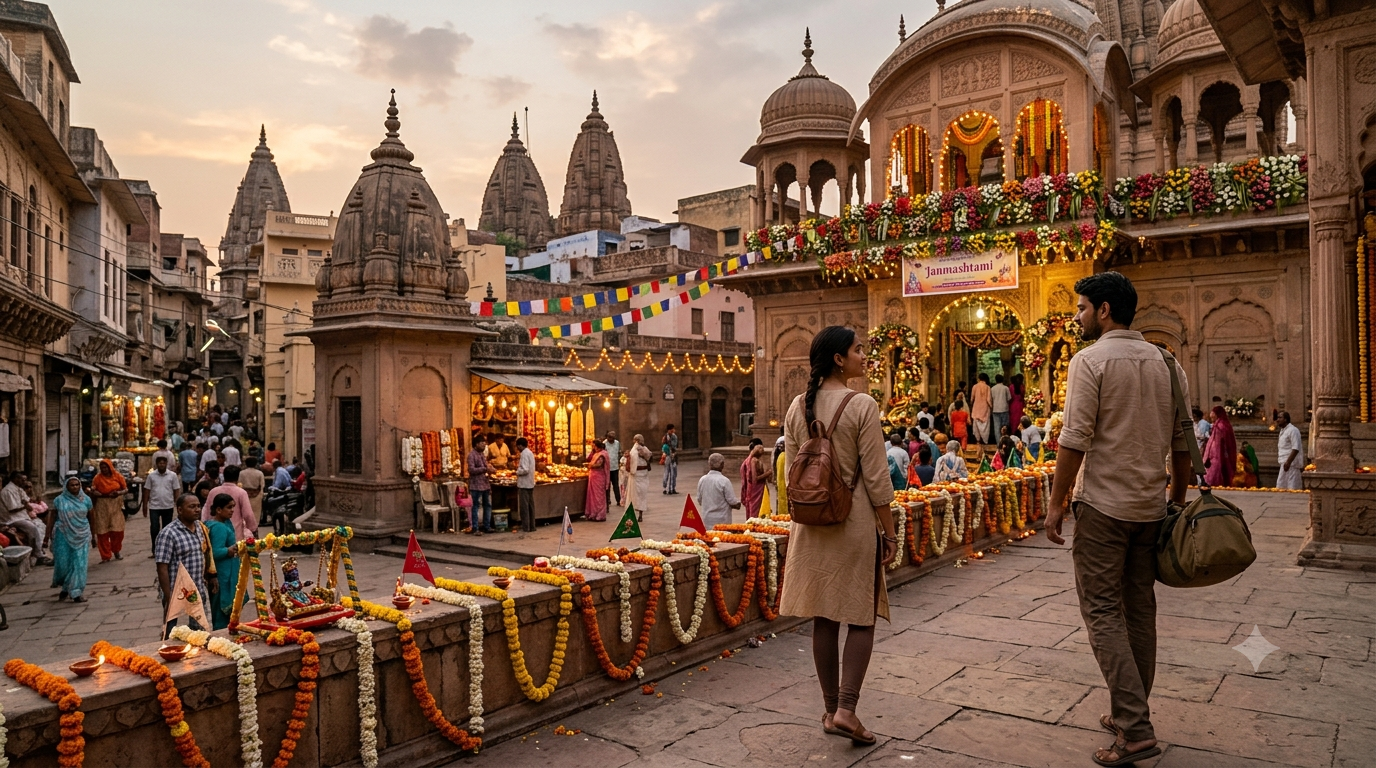
Janmashtami is usually celebrated at home, in temples and in neighbourhoods decorated with flowers, lights and colourful jhankis. There are devotional songs playing somewhere in the background, children dressed as little Krishna, and the familiar excitement of waiting for midnight.
But there is another way to experience the festival.
You can travel.
Across India, there are places where stories associated with Krishna are not just something you read in books or hear during a festival. They are connected with temples, old streets, local traditions and places that have been part of generations of devotion.
Mathura has the energy of Krishna’s birthplace. Vrindavan feels almost inseparable from the stories of his childhood. Dwarka carries a different side of his story, while places such as Barsana and Gokul offer their own traditions and atmosphere.
Travelling during Janmashtami gives you the chance to experience these places when the festival is at its most lively. Streets become colourful, temples prepare special celebrations and devotees arrive from different parts of the country.
But this isn’t a trip you need to rush through.
A good Janmashtami travel experience is about taking your time, understanding why a place matters and allowing yourself to experience the festival beyond the crowds.
If you’ve been thinking about taking a spiritual trip in India this Janmashtami, this guide can help you decide where to go, what to see and how to make the most of the journey.
Why Travel During Janmashtami?
There are plenty of ways to celebrate Janmashtami.
You can visit your local temple, celebrate with family or simply enjoy the festive atmosphere in your city. But travelling to a destination that has a strong connection with Krishna adds another layer to the experience.
The same temple that may feel peaceful on an ordinary morning can look completely different during Janmashtami. Markets become busier, temples are decorated for the occasion and devotees gather for special prayers and celebrations.
For travellers, this creates a chance to see the cultural side of the festival as well.
You can taste local food, explore old neighbourhoods, visit temples, watch traditional performances and learn how different communities celebrate the same festival in their own way.
And you don’t have to be travelling purely for religious reasons.
If you’re interested in Indian history, architecture, culture, photography or local traditions, a Janmashtami trip in India can be a fascinating experience.
Start Where Krishna’s Story Begins: Mathura
If there is one destination that naturally comes to mind when talking about a Janmashtami trip, it is Mathura.
Known as the birthplace of Lord Krishna, Mathura holds a special place in Hindu tradition and attracts visitors throughout the year. During Janmashtami, however, the city takes on a completely different atmosphere.
Temples and markets become lively, streets are decorated and devotees arrive to participate in the celebrations.
The city isn’t just about visiting one temple and leaving.
Take some time to explore Mathura properly.
Walk through the older parts of the city, visit its temples, try local sweets and observe the way the festival becomes part of everyday life.
If you’re visiting around Janmashtami, expect crowds. That’s part of the experience, but it also means you’ll need more patience than you might on a regular trip.
What to See in Mathura
Depending on your schedule, you can include several important places in your itinerary.
Shri Krishna Janmabhoomi Temple is one of the most significant places associated with Krishna’s birth and is naturally a major attraction during Janmashtami.
You can also explore Dwarkadhish Temple, which is known for its architecture and religious significance.
If you have time, visit Vishram Ghat as well. The Yamuna and the surrounding ghats add a different atmosphere to the city, particularly around the evening.
And don’t leave Mathura without trying its famous local sweets.
Mathura peda is an obvious choice, but exploring the local food scene can be part of the fun of the trip.
Vrindavan: Where Every Street Seems to Have a Story
If Mathura is associated with Krishna’s birth, Vrindavan is closely connected with the stories of his childhood and youth.
This is one of those destinations where you don’t necessarily need to visit a major attraction every hour.
Simply walking through the old streets can become an experience.
You’ll find temples, small shops selling devotional items, flower sellers, cafés and pilgrims moving through the town. During Janmashtami, the atmosphere becomes even more vibrant.
For first-time visitors, the sheer number of temples can be overwhelming.
So instead of trying to visit everything, choose a few places that genuinely interest you.
Temples and Places to Explore in Vrindavan
Banke Bihari Temple is among the best-known temples in Vrindavan and attracts large numbers of devotees.
ISKCON Vrindavan, also known as Krishna Balaram Mandir, is another popular place to visit, particularly for travellers who want to experience devotional singing and the international side of Krishna worship.
You can also explore Prem Mandir, which is known for its detailed architecture and evening illumination.
For a quieter experience, spend some time exploring the ghats and older parts of Vrindavan rather than moving from one major temple to another.
That slower pace can make the trip feel much more personal.
Barsana: A Different Side of the Krishna Story
Not far from Mathura and Vrindavan lies Barsana, a destination particularly associated with Radha.
If your Janmashtami holiday is going to include Mathura and Vrindavan, adding Barsana can give you a broader understanding of the Braj region and its traditions.
The town is known for its temples, hilly landscape and connection with Radha’s life and stories.
One of the most prominent attractions is Radha Rani Temple, located on the hilltop and offering views over the surrounding area.
Barsana is also famous for Lathmar Holi, but the town has a strong devotional atmosphere beyond the Holi season.
It can be a good addition to your itinerary if you want to explore some of the smaller destinations around Mathura instead of spending the entire holiday in the busiest temple areas.
Gokul: A Quieter Stop in the Braj Region
If Mathura and Vrindavan feel too busy for you, Gokul can offer a slower experience.
Gokul is associated with the stories of Krishna’s childhood and is located close to Mathura. The town has several temples and places connected with local traditions surrounding Krishna.
The atmosphere here can feel different from the major pilgrimage centres.
There are fewer expectations to constantly move from one attraction to another. You can take your time, visit the temples and observe the local surroundings.
For travellers who enjoy exploring places beyond the most famous tourist attractions, Gokul can be a worthwhile addition to a Krishna pilgrimage in India.
Dwarka: Discover the King Krishna
The Krishna story takes on a very different character when you travel to Dwarka.
Unlike the Braj region, which is strongly associated with Krishna’s childhood, Dwarka is traditionally connected with the later part of his life and his role as the ruler of Dwarka.
Located in Gujarat, the city is one of the important pilgrimage destinations in India and is particularly known for Dwarkadhish Temple.
The journey from Mathura and Vrindavan to Dwarka is obviously not a short one, so it makes more sense as part of a longer holiday rather than a quick Janmashtami weekend.
But if you have the time, the contrast is interesting.
Braj introduces you to stories of young Krishna.
Dwarka introduces you to another chapter of his life.
And travelling between these destinations makes the journey feel like you’re following different parts of the same story.
What Makes Dwarka Worth Visiting?
The Dwarkadhish Temple is the centrepiece of any Krishna-focused trip to the city.
The temple’s architecture and religious significance make it an important destination for pilgrims and travellers alike.
You can also explore Bet Dwarka, depending on the current access and travel arrangements, and visit Rukmini Devi Temple.
The coastal setting adds another dimension to the experience.
After spending time in the temple areas, you can explore the surroundings, enjoy the sea views and experience a completely different side of India from the Braj region.
This is one reason a longer Janmashtami travel itinerary can be so interesting.
You’re not visiting identical temples in different cities.
Each destination tells a different part of the story.
Plan a Braj Circuit Instead of Visiting Just One City
If you have three or four days, one of the easiest ways to plan a Janmashtami trip is to explore the Braj region rather than limiting yourself to one destination.
Mathura, Vrindavan, Gokul and Barsana are close enough to be combined into one itinerary, although travel time can increase considerably during festival periods because of crowds and road restrictions.
A simple structure could look like this:
Day 1: Arrive in Mathura, explore the city and visit key temples and ghats.
Day 2: Spend the day in Vrindavan, visiting selected temples and exploring the old town.
Day 3: Visit Barsana and Gokul, allowing enough time to explore without rushing.
Day 4: Return home or extend the trip if you have additional destinations planned.
This is only a framework. During Janmashtami, temple timings, crowd-management arrangements and local traffic conditions can affect your schedule, so keep the itinerary flexible.
What to Expect During Janmashtami Celebrations
If you’ve never travelled during Janmashtami before, the atmosphere may be very different from an ordinary sightseeing trip.
Temples can become extremely crowded, especially around major celebrations and midnight rituals. You may find long queues, restricted entry and changes to traffic movement around important temple areas.
But that’s also what makes the festival memorable.
You’ll see families arriving together, devotees singing, temples decorated with flowers and lights, children dressed as Krishna and local communities preparing special events.
Many places also organise jhankis, devotional music and cultural programmes.
The exact celebrations vary from city to city and from year to year, so it’s worth checking local arrangements before your journey.
Don’t Make Every Day About Temple-Hopping
This is especially important if you’re travelling with family or friends who may not be interested in visiting temples all day.
India’s Krishna destinations have much more to offer.
Take a break and try local food.
Walk through the markets.
Visit the ghats.
Explore local handicrafts.
Spend some time photographing the architecture.
Talk to people and learn about local traditions.
A spiritual trip doesn’t have to mean spending every waking hour inside a temple.
Sometimes, understanding how a festival fits into everyday life can be just as interesting as visiting the main shrine.
Experience Janmashtami Beyond the Main Temple Visits
A Janmashtami trip becomes much more interesting when you stop treating it like a checklist of temples. The temples are obviously an important part of the journey, but there is so much happening around them that it would be a shame to spend the entire trip moving from one queue to another.
Walk through the local markets in Mathura and Vrindavan. You’ll find shops selling flowers, devotional items, sweets, clothes and small souvenirs. During the festival, the streets can feel especially lively, with decorations and preparations happening around you.
Take some time to sit at a ghat in the evening, try local food or simply observe how people are preparing for the celebrations. These quieter moments can give you a better sense of what Janmashtami means to the people who live in these cities.
If you’re travelling with family, this slower approach can also make the trip easier. Not everyone wants to spend eight hours visiting temples, and there is no reason they should.
Be There for the Midnight Celebration
The midnight celebration is one of the most anticipated parts of Janmashtami, as it marks the traditional birth time of Krishna. In places such as Mathura and Vrindavan, the atmosphere around the major temples can become incredibly energetic as the time approaches.
Devotional songs, prayers, bells and celebrations create an atmosphere that is very different from an ordinary evening visit.
If attending a midnight celebration is important to you, plan ahead. Major temples can attract very large crowds, and entry arrangements may be different from normal days. Check official temple information and local announcements before visiting rather than assuming the usual timings will apply.
It is also worth keeping the next morning relatively free. Staying out late during a crowded festival and then trying to follow a packed sightseeing schedule at 7 a.m. is a great way to turn a spiritual holiday into an endurance test.
What to Eat During a Janmashtami Trip
Food is one of the easiest ways to make a destination feel real, and the Braj region has plenty to offer beyond the sweets you may already know.
Mathura is particularly famous for its peda, which is closely associated with the city. You can also find a variety of North Indian snacks and sweets in the local markets.
In Vrindavan and the surrounding areas, you’ll find plenty of vegetarian food, including traditional preparations and simple local meals. Since many devotees observe fasting during Janmashtami, you’ll also notice shops and restaurants offering foods suitable for vrat.
If you’re observing a fast, check the ingredients before ordering because preparation methods can vary from place to place.
And if you’re not fasting, don’t feel like you have to turn every meal into a grand restaurant experience. Some of the most enjoyable food stops can be simple local places where you can sit down after a morning of sightseeing.
Some Things Worth Trying
- Mathura peda
- Lassi
- Kachori and local snacks
- Traditional North Indian sweets
- Vrat-friendly dishes if you’re fasting
- Vegetarian thalis
- Local milk-based desserts
Food can easily become part of your travel experience rather than something you squeeze between temple visits.
Don’t Miss the Cultural Side of Janmashtami
One of the best things about travelling during a major Indian festival is seeing how local traditions become part of everyday life.
Around Janmashtami, you may come across decorated temples, devotional performances, bhajans, Krishna-themed tableaux and children dressed as Krishna and Radha. Some neighbourhoods also organise local programmes and jhankis depicting different stories associated with Krishna.
These experiences can vary from one destination to another, so don’t expect every place to celebrate in exactly the same way.
If you see a local celebration that is open to visitors, take the time to watch rather than immediately reaching for your camera.
A festival is more interesting when you experience it before trying to document it.
Other Krishna Destinations Worth Adding to Your Travel List
Mathura and Vrindavan are the obvious choices for Janmashtami, but they aren’t the only destinations where you can explore Krishna-related traditions.
If you’re planning a longer spiritual holiday, there are several other places in India worth considering.
Nathdwara: Krishna Worship in Rajasthan
Nathdwara in Rajasthan is known for the Shrinathji Temple, one of the important Krishna temples in the country.
The town has a strong devotional identity, and the temple’s traditions are closely connected with the worship of Shrinathji.
What makes Nathdwara particularly interesting for travellers is that the religious experience is closely woven into the town itself. The markets, food, local art and everyday life all reflect the importance of the temple.
If you’re already planning a Rajasthan trip, adding Nathdwara can give your journey a different cultural dimension.
You could combine it with Udaipur, which is relatively nearby, and turn the trip into a mix of temples, lakes, architecture and local food.
Puri: A Different Krishna Tradition
Puri may not be the first place that comes to mind when you think of a Krishna-focused journey, but its religious traditions make it an interesting destination for travellers exploring Krishna-related worship in India.
The Jagannath Temple is one of the country’s most important pilgrimage sites, and Lord Jagannath is traditionally associated with Krishna.
Puri also offers something beyond the temple itself. You can explore the coastal landscape, try local Odia food and spend time experiencing the city’s unique cultural atmosphere.
If you’re planning a longer Odisha holiday, you can combine Puri with other destinations rather than making the entire trip about one temple.
Guruvayur: A South Indian Krishna Experience
If you want to experience Krishna worship in a completely different part of India, consider Guruvayur in Kerala.
The Guruvayur Temple is one of the most important Krishna temples in South India and attracts devotees throughout the year.
The experience here is quite different from Mathura or Vrindavan. The architecture, local customs, food and surroundings reflect Kerala’s culture, showing how the same devotion can take different forms across India.
That is one of the most interesting things about planning a Janmashtami trip in India.
You don’t have to visit the same kind of destination repeatedly.
You can travel across regions and discover how different communities celebrate and understand Krishna.
A 4-Day Mathura and Vrindavan Janmashtami Itinerary
If you have only a few days, you don’t need to travel across the entire country.
A focused Braj trip can give you plenty to experience.
Day 1 – Arrive in Mathura and Explore the City
Reach Mathura and check into your hotel before starting your sightseeing.
Keep the first day relatively relaxed. Visit important temples and spend some time around Vishram Ghat in the evening if conditions and access allow.
Explore the local market and try some Mathura sweets before returning to your hotel.
If you’re travelling close to Janmashtami, check local traffic and crowd restrictions before deciding how much sightseeing to include.
Day 2 – Experience Janmashtami in Mathura
Keep this day focused on the festival.
Visit the major celebration areas according to the latest local arrangements and allow plenty of time for security checks and crowds.
If you’re planning to attend the midnight celebration, don’t fill the morning and afternoon with too many activities. Rest during the day so you have enough energy for the evening.
The experience will be busy, but that’s part of what makes celebrating Janmashtami in Mathura so different from celebrating it at home.
Day 3 – Vrindavan
Start the day by travelling to Vrindavan.
Choose a few temples rather than trying to visit every major one. Banke Bihari Temple, ISKCON Vrindavan and Prem Mandir can be considered depending on your interests, opening arrangements and crowd conditions.
Spend some time exploring the surrounding streets and local markets.
In the evening, find a quieter spot to relax rather than immediately moving to another attraction.
Day 4 – Gokul or Barsana and Return
On the final day, choose between Gokul and Barsana depending on your interests and travel plans.
Barsana is a good option if you want to explore the traditions associated with Radha, while Gokul offers another connection with the childhood stories of Krishna.
After sightseeing, begin your journey home with enough travel time.
Don’t try to add another major destination just because you have a few hours left.
A Longer Janmashtami Itinerary for Dwarka
If you have a week or more and want to experience a different side of Krishna’s story, Dwarka can become the focus of a longer Gujarat trip.
You can spend your first few days exploring the city and visiting Dwarkadhish Temple, then add nearby attractions such as Rukmini Devi Temple and other coastal destinations.
If access and local arrangements permit, you can also plan a visit to Bet Dwarka.
The advantage of taking more time is that you don’t have to rush between religious sites. You can spend an evening near the coast, try Gujarati food and explore the local markets.
This kind of itinerary works particularly well for travellers who want their Janmashtami holiday to be a combination of pilgrimage, culture and a relaxed domestic trip.
Things to Know Before Travelling During Janmashtami
Festival travel is different from normal travel.
The biggest thing to remember is that popular destinations can become extremely crowded. Hotels may fill quickly, transportation can be busier than usual and local traffic restrictions may affect your plans.
Temple entry can also work differently during major celebrations.
So, before leaving home, check:
- Current temple timings and entry arrangements
- Local traffic restrictions
- Accommodation availability
- Weather conditions
- Transportation schedules
- Festival event timings
- Any local advisories
Don’t rely entirely on information from an old travel blog or social media post. Festival arrangements can change from year to year.
Dress Comfortably and Respect Local Customs
When visiting temples and religious destinations, comfortable and respectful clothing is a sensible choice.
You may also need to follow specific temple rules regarding footwear, photography or entry into certain areas.
If photography isn’t allowed, don’t try to find a way around the rule just because other visitors are taking pictures.
Remember that these are active places of worship, not simply tourist attractions.
A little respect goes a long way, especially during a festival when thousands of people may be visiting for deeply personal reasons.
Carry Less and Stay Mobile
If you’re planning to visit several places in the Braj region, avoid carrying heavy luggage everywhere.
Keep your main bags at your hotel and take only what you need for the day.
A small backpack with water, your phone, power bank, wallet, identification and basic medicines should be enough for most sightseeing days.
Comfortable footwear is particularly important. You’ll likely spend more time walking than you expect, especially around busy temple areas.
And if you’re visiting during the warmer part of the year, stay hydrated and take breaks.
Give Yourself More Time Than Google Maps Suggests
This is one of those travel lessons you only learn after being stuck in festival traffic.
A route that normally takes 30 minutes may take considerably longer during Janmashtami because of crowds, road closures, parking restrictions or large numbers of pedestrians.
Don’t schedule temple visits back-to-back with impossible travel times.
If you have an important temple visit or train to catch, leave a generous buffer.
It is much better to arrive early and have a cup of tea than to spend the entire journey checking the clock.
Make Your Janmashtami Trip About More Than Photographs
There will be plenty of things you’ll want to photograph.
Decorated temples.
Flowers.
Markets.
Traditional clothing.
Evening lights.
But don’t let the camera become the main reason you’re there.
Put your phone away for a while.
Listen to the devotional music.
Watch the celebrations.
Try the food.
Notice the details around you.
Travel becomes much more memorable when you’re actually present for it.
And you’ll still have plenty of photographs to take home.
When Is the Best Time to Plan Your Janmashtami Trip?
If you’re specifically travelling to experience the festival, visiting around Janmashtami gives you the strongest atmosphere. The trade-off is that you’ll also be dealing with larger crowds and higher demand.
If you prefer a quieter spiritual trip, visiting Mathura, Vrindavan or Dwarka outside the main festival period can be much more relaxed.
So the answer depends on what you want.
For the festival atmosphere: travel around Janmashtami.
For a quieter temple experience: consider travelling at another time.
Neither option is better.
They’re simply different kinds of travel experiences.
Make Your Janmashtami Trip More Than a Temple Visit
Once you’ve explored the main temples and experienced the festival atmosphere, there is still plenty to discover. One of the nicest things about travelling during Janmashtami is that the festival becomes part of the whole destination. You notice it in the markets, the food, the decorations and even in the way people talk about the places around them.
So don’t feel like you have to spend the entire trip standing in temple queues. Give yourself time to explore the destination as well. A morning at a temple can be followed by a local breakfast, an afternoon walk through the old streets and a relaxed evening near a ghat or market.
That balance can make your Janmashtami trip in India feel like a proper holiday rather than a rushed pilgrimage.
Explore the Markets Around Mathura and Vrindavan
The markets around Mathura and Vrindavan are worth exploring, especially when the festival is approaching. You’ll find flowers, idols, devotional books, traditional clothes, sweets and small souvenirs connected with Krishna and the Braj region.
You don’t have to buy something at every shop. Sometimes walking through the market is enough to understand the local atmosphere.
If you’re travelling with family, the markets can also be an easy way to take a break between temple visits. Stop for a drink, try a local snack and take your time looking around.
For travellers interested in photography, these areas can be particularly interesting because of the colours, decorations and everyday activity. Just remember that people aren’t part of the scenery, so ask before photographing someone closely.
Try the Local Food Instead of Eating Only at Your Hotel
A Janmashtami travel guide would feel incomplete without talking about food.
The Braj region has plenty of simple, familiar North Indian flavours, but there are also local sweets and snacks that are closely associated with the area. Mathura peda is the obvious one, and trying a fresh peda from a reputable local shop can easily become part of your trip.
You’ll also find lassi, kachori, poori-based breakfasts and plenty of vegetarian meals.
During Janmashtami, many people observe a fast, so you’ll also see restaurants and food stalls offering vrat-friendly dishes. If you’re fasting, check what ingredients are being used before ordering, as recipes can differ.
If you’re not fasting, don’t feel like you need to eat only at places marketed specifically to tourists. Ask locals for recommendations and try a few simple places along the way.
Food is often one of the easiest ways to make a travel memory stick.
Visit the Ghats When the Day Starts to Slow Down
After spending several hours around busy temples, the ghats can offer a completely different pace.
In Mathura, Vishram Ghat is an important place to include if you’re exploring the city. The area around the Yamuna has a different atmosphere in the evening, when the pace of the day starts to slow down.
Rather than rushing in, taking a photograph and leaving, give yourself some time to simply sit and observe.
The river, temple bells, evening activity and people coming for prayer create a scene that feels very different from the busy market streets.
If you’re travelling with family or friends, this can also be a good time to take a break from the itinerary.
Sometimes the quietest part of a trip ends up being the part you remember most.
Experience the Festival Without Trying to Control Every Moment
Janmashtami celebrations can be unpredictable from a traveller’s point of view.
Crowds may be larger than expected. Traffic can change. A temple may have different entry arrangements. A procession may take longer than planned.
Instead of getting frustrated by every change, accept that you’re visiting during one of the busiest and most important festival periods of the year.
The atmosphere is part of the experience.
You may see children dressed as Krishna, local groups preparing performances, families arriving together and streets decorated for the celebration.
Some moments may not fit neatly into your itinerary.
Let them happen.
That’s one of the differences between travelling during a festival and visiting a destination on an ordinary day.
Janmashtami Travel Ideas for Families
A family trip during Janmashtami can be incredibly meaningful, especially if children are travelling with you.
Mathura and Vrindavan offer plenty of opportunities to introduce younger travellers to the stories, traditions and cultural side of the festival. But remember that long queues and crowded streets can be tiring for children.
Don’t plan too many temple visits in one day.
Choose a few important places and leave enough time for meals and rest. Carry water and snacks, keep children close in crowded areas and decide on a meeting point in case someone gets separated.
You can also make the trip more interesting for children by explaining the stories behind the places you’re visiting rather than simply telling them the name of each temple.
Once they understand the story, the destination becomes much more interesting.
A Janmashtami Trip for Couples
If you’re travelling as a couple, you don’t necessarily need to make the entire holiday about temple visits either.
You can combine spiritual experiences with local sightseeing, food and slower evenings.
A Mathura-Vrindavan trip can work well for couples who enjoy cultural travel. Start the morning with a temple visit, explore local streets during the afternoon and keep the evening relaxed.
If you want more time away from the crowds, consider adding a quieter destination nearby rather than staying in the busiest areas throughout the trip.
And if you’re planning a longer holiday, you can combine a spiritual destination with another city or nature destination so that the trip has a little more variety.
A Janmashtami Trip for Couples
A solo Janmashtami trip can also be a rewarding experience if you’re comfortable travelling independently.
You have complete freedom over your schedule, which is useful when festival crowds make plans unpredictable.
You can spend more time in one temple if you want, leave when you’re ready, explore a market or simply sit somewhere and observe the surroundings.
At the same time, festival travel requires extra awareness when you’re alone. Keep your phone charged, share your basic itinerary with someone at home, be careful with valuables and avoid unfamiliar areas late at night.
The usual travel rule applies: if something feels unsafe or uncomfortable, leave.
Plan a Longer Krishna Circuit If You Have More Time
If you have a week or more, you don’t have to stop at Mathura and Vrindavan.
You can create a broader Krishna pilgrimage itinerary in India that connects different destinations associated with Krishna traditions.
For example, you could explore the Braj region first and then plan a separate journey towards Dwarka. Alternatively, you could explore Nathdwara or include Puri or Guruvayur if you’re interested in seeing how Krishna-related traditions are experienced in different parts of India.
These are not destinations you should try to squeeze into a four-day trip.
The distances are significant, and rushing through them defeats the purpose.
A longer itinerary gives you the opportunity to experience the differences between regions instead of simply collecting temple visits.
Mathura, Vrindavan or Dwarka: Which One Should You Choose?
If you have limited time, choosing one destination can be difficult.
The simplest way is to think about what you want from the trip.
Mathura is the natural choice if you want to experience the birthplace associated with Krishna and the major Janmashtami celebrations.
Vrindavan works well if you’re interested in temples and traditions connected with Krishna’s childhood and the Braj region.
Dwarka is better suited to a longer trip focused on another important chapter of Krishna’s story, along with Gujarat’s coastal landscape and culture.
You don’t have to visit all three in one holiday.
One meaningful trip is better than three rushed ones.
What Should You Buy During a Janmashtami Trip?
You don’t need to return home with a suitcase full of souvenirs.
Look for something that actually reminds you of the destination.
Local handicrafts, small Krishna idols, devotional books, traditional textiles, artwork or locally made sweets can make thoughtful souvenirs.
If you’re buying something fragile, pack it carefully and ask the seller about transportation.
And when possible, buy from local shops and artisans rather than treating the market like a place to collect generic tourist products.
A small handmade item often carries more meaning than something mass-produced.
Respect the Religious Side of the Destination
Mathura, Vrindavan and the other places mentioned in this guide are not simply tourist destinations.
People visit them for deeply personal and spiritual reasons.
That should influence the way you travel.
Dress appropriately when entering temples, follow photography rules and avoid blocking entrances or pathways simply to take photographs. If a particular area is reserved for devotees, respect the restriction.
During crowded celebrations, be patient with temple staff and volunteers.
You may be waiting longer than expected, but everyone around you is there for the same reason.
A little patience can make the experience easier for everyone.
Be Prepared for Crowds During Janmashtami
If you specifically want to experience the festival, crowds are unavoidable in popular destinations.
This doesn’t mean you shouldn’t go.
It simply means you should plan differently.
Try to arrive early where possible, keep your belongings secure and avoid carrying unnecessary luggage into crowded areas.
Wear comfortable footwear because you may spend considerable time walking or standing. Keep some water with you, although you should always follow local rules about carrying bottles into temple premises.
If you’re travelling with children or older family members, discuss the plan beforehand and avoid making them stand for hours unnecessarily.
And don’t assume that every route shown on a map will remain accessible during the festival.
Local arrangements can change quickly.
Keep Your Travel Plans Flexible
Festival travel is one of those situations where a flexible itinerary is more useful than a perfect one.
Your plan might say you’re visiting three temples before lunch.
Then you reach the first one and discover a large crowd.
Instead of stressing about missing the second and third, adjust the day.
Maybe you visit one more temple in the evening.
Maybe you explore the market instead.
Maybe you return to the hotel and rest.
The destination isn’t going anywhere.
You don’t have to “complete” it.
A Few Practical Tips Before You Leave
A little preparation can make your Janmashtami holiday much easier.
Book your accommodation and major transportation arrangements early if you’re travelling during the festival period. Keep digital copies of your bookings and identification documents, and carry a small amount of cash in case you visit places where digital payments are inconvenient.
Check the weather before leaving, especially if you’re combining your temple visit with other outdoor sightseeing.
Most importantly, check official sources for temple timings, entry rules and festival arrangements close to your travel date. These can change, particularly during major celebrations.
What to Carry for a Janmashtami Trip
For most travellers, packing light is the easiest option.
A practical day bag can include:
- Water bottle
- Phone and power bank
- Identification
- Small wallet
- Personal medicines
- Hand sanitiser
- Sunglasses
- Tissues
- Comfortable scarf or stole if needed
- A small bag for anything you purchase
If you’re travelling with children, add whatever essentials they normally need.
And if you’re planning to spend several hours outside, don’t forget to take breaks.
A festival trip should be memorable for the right reasons.
Don’t Let Your Phone Become the Main Character
There’s going to be a lot worth photographing.
The temple decorations.
The colourful markets.
The evening lights.
The crowds.
The food.
The architecture.
But if you spend the entire trip looking through your phone screen, you might miss the experience you travelled for.
Take a few photographs.
Then put the phone away.
Listen to the music.
Watch the celebrations.
Notice the details.
Talk to the people you’re travelling with.
You’ll still have enough pictures when you get home.
A Different Kind of Travel Experience
What makes a Janmashtami trip special isn’t simply the number of temples you manage to visit.
It’s the feeling of being somewhere where the festival is deeply woven into the local culture.
You see it in the decorations outside homes.
You hear devotional songs from nearby temples.
You find sweets and flowers being prepared for the occasion.
You see families travelling together.
You notice children dressed as Krishna.
All of these small details make the festival feel alive in a way that watching a celebration on a screen simply can’t replicate.
And that’s why travelling during Janmashtami can be worth doing at least once.
Let the Journey Take You Beyond the Famous Places
If you have extra time, don’t be afraid to explore beyond the most famous temple.
Visit a smaller town.
Try a local dish.
Talk to someone who has lived there for years.
Explore a market.
Take a slower walk through an old neighbourhood.
The most popular attractions will always be there, but travelling is also about discovering the things you weren’t specifically looking for.
You might leave Mathura remembering the temple you visited.
But you might also remember the little sweet shop you found afterwards.
You might remember the evening walk.
You might remember a conversation with a local.
Those details are what make a trip feel like your own.
Janmashtami Is a Festival, But It Can Also Be a Journey
You don’t have to choose between celebrating the festival and taking a holiday.
You can do both.
You can begin in Mathura, explore Vrindavan, visit Barsana and Gokul, or take a longer journey towards Dwarka. You can spend your mornings visiting temples and your afternoons discovering local food and markets.
You can travel with family, friends, your partner or even on your own.
The important thing is to travel with curiosity and respect.
Because when you visit places connected with stories you’ve heard since childhood, something interesting happens.
The stories stop feeling distant.
The streets, temples and landscapes give them a sense of place.
And suddenly, the festival you’ve celebrated every year feels a little different.
Plan Your Janmashtami Trip Without Rushing
By now, you may already have a destination in mind. Maybe you want to experience Janmashtami in Mathura, spend a few days exploring Vrindavan, or take a longer journey to Dwarka. Whatever you choose, the easiest way to enjoy the trip is to keep your plans realistic.
Festival travel can be busy, and popular destinations may take longer to explore than they normally would. Instead of trying to visit every temple, market and attraction, choose the places that matter most to you and leave some room for unexpected experiences.
A relaxed itinerary also gives you time to enjoy the destination beyond sightseeing. You can stop for local food, spend an evening at a ghat, explore a market or simply take a break when the crowds become tiring.
How Many Days Do You Need?
The number of days depends entirely on the kind of Janmashtami trip you’re planning.
If you only want to experience Mathura and the main festival celebrations, two to three days can work. You can arrive in Mathura, explore the city, spend time around the Janmashtami celebrations and then visit Vrindavan before heading home.
For a more relaxed Braj trip covering Mathura, Vrindavan, Barsana and Gokul, keep around three to four days. This gives you enough time to explore without turning every day into a race.
If you want to include Dwarka, Nathdwara or another Krishna destination, plan a longer holiday. These places are better treated as separate parts of a broader journey rather than something you try to squeeze into a short festival break.
A Simple 5-Day Janmashtami Itinerary
If you have around five days and want to explore the Braj region properly, this itinerary can give you a good starting point.
Day 1 – Mathura
Arrive in Mathura and check into your hotel. Keep the first day light, especially if you’ve travelled a long distance. After settling in, explore the local area, visit a few important temples and spend some time around Vishram Ghat if access and local conditions permit.
Keep the evening relaxed and try some local food before returning to your hotel.
Day 2 – Janmashtami Celebrations
Use the second day to experience the festival itself. Visit the main celebration areas according to the latest local arrangements and keep plenty of time for security checks, queues and traffic.
If you’re planning to attend the midnight celebration, avoid filling the daytime with too many activities. Rest whenever you get the opportunity so you can enjoy the evening rather than spending it exhausted.
Day 3 – Vrindavan
Travel to Vrindavan and spend the day exploring selected temples and the older parts of the town. Banke Bihari Temple, ISKCON Vrindavan and Prem Mandir can be considered depending on your interests and the current crowd situation.
Don’t try to visit every temple in one day. Give yourself time to explore the markets, stop for food and simply experience the atmosphere.
Day 4 – Barsana and Gokul
Use the fourth day to explore destinations around the Braj region. Barsana offers a connection with Radha and is home to the Radha Rani Temple, while Gokul is associated with stories from Krishna’s childhood.
You can choose one of the two if you’re travelling slowly, or include both if your transportation and schedule allow.
Day 5 – Slow Morning and Return
Don’t plan a long list of attractions on your final morning. Have breakfast, buy any local sweets or souvenirs you want and begin your journey home with enough buffer time.
If your return journey is long, leave early rather than trying to fit in one more sightseeing stop.
When Is the Best Time to Visit?
If your main goal is to experience the festival atmosphere, travelling around Janmashtami is obviously the most exciting option. You’ll see decorated temples, special programmes, devotional music and large gatherings of devotees.
But there is a trade-off.
The same period also brings larger crowds, busy roads and higher demand for accommodation and transportation.
If you want a quieter spiritual holiday, consider visiting Mathura, Vrindavan or Dwarka outside the main festival period. You’ll have more freedom to explore at your own pace and may find it easier to spend time inside temples without dealing with festival-level crowds.
So there isn’t one perfect time for everyone.
It depends on whether your priority is experiencing Janmashtami celebrations or having a more relaxed temple and cultural holiday.
What About the Weather?
Weather can make a big difference to your travel experience, particularly if you’re spending several hours outdoors.
Before leaving, check the latest forecast for your destination and pack accordingly. If you’re visiting the Braj region during a warm or humid period, lightweight clothing, comfortable footwear and regular hydration will be important.
For a coastal destination such as Dwarka, keep the local weather and sea conditions in mind when planning outdoor activities.
If rain is expected, carry suitable protection and allow additional travel time.
The weather doesn’t have to stop your trip, but it should influence your itinerary.
How to Travel Responsibly During the Festival
Large religious festivals attract huge numbers of visitors, and responsible travel becomes even more important during such periods.
Avoid littering, respect local customs and follow instructions from temple authorities, police and volunteers. If photography is restricted in a particular area, follow the rule.
Be patient with local residents as well. Roads, markets and public spaces can become much busier than normal, and local people are dealing with the same crowds you are.
If you’re visiting a sacred place, remember that it is first a place of worship and only then a travel destination.
That small change in perspective can make your experience much more respectful and enjoyable.
Keep Some Cash and Your Essentials Handy
Digital payments are common across many Indian destinations, but carrying some cash is still useful when you’re travelling through crowded markets, smaller shops or areas where payment connectivity may be inconsistent.
Keep your phone charged and carry a power bank, especially if you’re spending long hours outside.
Your day bag should contain only the essentials, such as your phone, identification, some cash, personal medicines, water and anything else you genuinely need.
Avoid carrying unnecessary valuables into crowded temple areas.
The lighter you travel, the easier it is to move around.
A Few Things to Avoid During Your Janmashtami Trip
Festival travel can be wonderful, but a few common mistakes can make it unnecessarily stressful.
Don’t depend on an old itinerary. Temple timings, traffic arrangements and entry rules can change during major festivals.
Don’t plan too many temples in one day. You’ll spend more time travelling and waiting than actually experiencing the places.
Don’t ignore local advice. If authorities or temple staff ask visitors to follow a particular route, listen to them.
Don’t carry unnecessary valuables. Crowded areas require extra attention to your belongings.
Don’t assume every attraction will be open normally. Festival arrangements can affect regular sightseeing.
Don’t rush through the experience. You travelled all this way to experience the place, so give yourself time to actually be there.
Janmashtami Travel FAQs
Where is the best place to celebrate Janmashtami in India?
Mathura and Vrindavan are among the most popular destinations for experiencing Janmashtami because of their strong connection with Krishna and the Braj tradition. Mathura is associated with Krishna’s birth, while Vrindavan is closely connected with stories from his childhood.
Dwarka is another important destination if you’re interested in a different chapter of Krishna’s story.
Is Mathura worth visiting during Janmashtami?
Yes, especially if you want to experience the festival in a place strongly associated with Krishna’s birth. However, you should be prepared for large crowds, busy roads and changes to normal temple access and traffic arrangements.
Planning accommodation and transportation in advance is particularly important during the festival period.
How many days are enough for a Mathura-Vrindavan trip?
Two to three days can cover the main highlights, while three to four days will give you more time to include places such as Barsana and Gokul without rushing.
If you’re travelling during Janmashtami, allow extra time because crowds can significantly increase travel and waiting times.
What are the best places to visit during Janmashtami?
Mathura, Vrindavan, Barsana, Gokul and Dwarka are among the destinations commonly associated with Krishna traditions. Nathdwara and Guruvayur can also be considered if you’re interested in exploring Krishna worship in different parts of India.
The right choice depends on your available time and the kind of travel experience you’re looking for.
What food should I try in Mathura?
Mathura peda is one of the city’s best-known specialities. You can also try lassi, kachori and other vegetarian snacks and sweets available around the city.
During Janmashtami, you’ll also find vrat-friendly food for people observing a fast.
Can I visit Vrindavan and Mathura in one trip?
Yes. Mathura and Vrindavan are commonly combined into the same trip, and adding Barsana or Gokul is also possible if you have additional time.
During Janmashtami, however, keep your schedule flexible because traffic and crowds can make short journeys take considerably longer.
Is Janmashtami a good time for a family trip?
It can be a meaningful family travel experience, particularly if everyone is interested in the cultural and religious side of the festival. Families travelling with children or older members should avoid overpacking the itinerary and plan regular breaks.
Comfortable accommodation and easy transportation can make a big difference.
Can I plan a Janmashtami trip on a budget?
Yes. You can keep Inclusion/Exclusions manageable by choosing convenient train or road transportation, booking accommodation early and focusing on local experiences rather than expensive activities.
Your biggest expenses will generally be transportation, accommodation and food, so compare options before booking.
What should I wear when visiting temples during Janmashtami?
Comfortable and respectful clothing is the safest choice. Some temples may have their own guidelines, so check the rules before visiting and follow any instructions regarding footwear, photography or entry.
Is it better to visit during Janmashtami or at another time?
If you want to experience the festival atmosphere, visiting around Janmashtami makes sense. If you prefer fewer crowds and a slower temple experience, another time of year may be more comfortable.
Both options offer a different kind of travel experience.
A Journey Through the Stories We Grew Up Hearing
There is something special about visiting a place you’ve heard about since childhood.
You may have grown up listening to stories about Krishna without ever thinking about where those stories were set. Then you arrive in Mathura, walk through the old streets of Vrindavan or stand beside a temple connected with those traditions, and suddenly those stories have a physical place.
That’s what makes a Krishna-themed travel experience different from an ordinary holiday.
You’re not simply ticking attractions off a list.
You’re connecting places, stories, traditions and people.
And you don’t have to be a religious traveller to appreciate that. India’s festivals are deeply connected with its history, art, food, music and everyday culture. Janmashtami gives you an opportunity to experience all of those things together.
Take the Journey at Your Own Pace
Maybe you’ll visit Mathura and Vrindavan in a few days.
Maybe you’ll spend a week exploring different Krishna destinations.
Maybe you’ll travel with your parents.
Maybe you’ll go with friends.
Or perhaps you’ll take the trip on your own.
There is no single correct way to experience Janmashtami.
Choose the destination that interests you, plan around your available time and leave enough space for the unexpected moments.
Don’t worry about seeing everything.
You won’t.
And you don’t need to.
The point of travelling during a festival is to experience the atmosphere, understand the culture and return home with a better sense of the place you visited.
Make This Janmashtami a Journey Worth Remembering
A festival doesn’t have to be experienced only from home.
This Janmashtami, you can take the celebration somewhere new.
Walk through Mathura and explore the places associated with Krishna’s birth. Spend time in Vrindavan, where stories of his childhood are woven into the town’s identity. Visit Barsana and Gokul if you have more time, or travel farther to Dwarka and discover another chapter of Krishna’s story.
Try local food.
Explore the markets.
Listen to the music.
Watch the celebrations.
Take photographs, but don’t forget to put the camera away sometimes.
Most importantly, travel with patience and respect.
Because the best part of a Janmashtami trip isn’t necessarily the number of temples you visit. It is the feeling of being somewhere where history, faith and everyday life have been connected for generations.
Plan Your Janmashtami Journey With TrippingCube
If you’re planning a Janmashtami trip in India, choosing the destination is only the first step. Transportation, accommodation, sightseeing and the right itinerary can make a big difference, especially when you’re travelling during a busy festival.
Whether you want to explore Mathura and Vrindavan, plan a longer domestic pilgrimage or combine your spiritual journey with other attractions, TrippingCube can help you put together a travel plan around your dates, budget and preferences.
For more ideas and options, explore our Domestic Trips and discover destinations across India that can be part of your next holiday.
And if you already know where you want to go, you can contact TrippingCube to discuss your travel plans and create an itinerary that works for you.
Go Where the Stories Still Live
There are some journeys where the destination feels like more than a place on a map.
Mathura is one of them.
Vrindavan is another.
Dwarka, Barsana, Gokul and other Krishna-linked destinations carry their own stories, traditions and ways of celebrating devotion.
You may arrive as a traveller looking for a different way to celebrate Janmashtami.
You may leave with something else entirely — a new appreciation for the culture, a few unforgettable meals, photographs of places you’ve only heard about before and memories of a festival experienced somewhere far from your usual routine.
So this Janmashtami, if you’re looking for a reason to travel, follow the stories.
Go where the stories of Krishna still live. ❤️

